In the rapidly evolving landscape of the telecommunications industry, Generative Artificial Intelligence (Generative AI) is emerging as a transformative force, offering innovative solutions to address complex challenges and elevate operational efficiency. This article delves into the applications of Generative AI in the telecom sector, exploring use cases and showcasing how this technology is reshaping the way telecommunications companies operate.
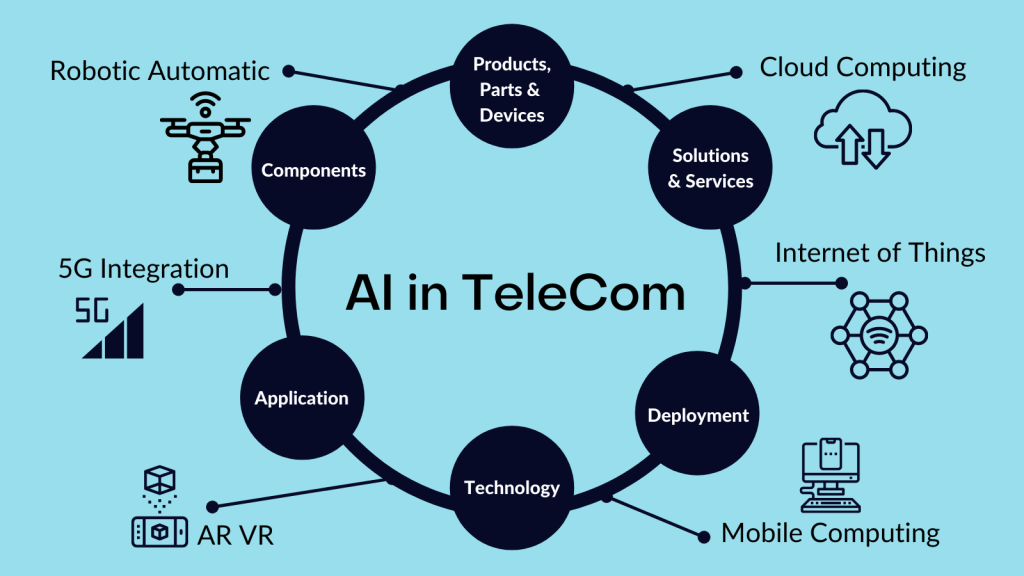
Generative AI in Telecom: A Paradigm Shift
Defining Generative AI
Generative AI refers to a class of artificial intelligence that leverages algorithms to generate new, previously unseen data or content. Generative AI in telecom industry is revolutionizing the way networks are optimized, services are personalized, and operational processes are streamlined.
The Power of Creativity in Data
Generative AI is inherently creative, allowing it to generate synthetic data that mirrors real-world scenarios. This capability is particularly valuable in the telecom sector, where data-driven decision-making is crucial for network optimization, predictive maintenance, and the development of personalized services.
Use Cases of Generative AI in Telecom Industry
1. Network Optimization and Planning
Generative AI plays a pivotal role in optimizing and planning telecom networks. By analyzing vast datasets, Generative AI algorithms can simulate various network configurations and predict the most efficient layouts. This ensures optimal coverage, minimizes latency, and enhances the overall performance of telecom networks.
2. Predictive Maintenance
Telecom companies operate expansive infrastructure, and predicting equipment failures is essential to maintaining uninterrupted services. Generative AI analyzes historical data on equipment performance, environmental conditions, and usage patterns to predict potential failures. This proactive approach to maintenance helps minimize downtime and ensures a more reliable network.
3. Fraud Detection and Prevention
Telecom operators face the constant challenge of detecting and preventing fraudulent activities, such as SIM card cloning or subscription fraud. Generative AI analyzes patterns in user behavior, call records, and transaction data to identify anomalies indicative of fraudulent activities. This proactive fraud detection can save telecom companies significant financial losses.
4. Personalized Customer Experiences
Generative AI enables telecom companies to create personalized customer experiences by analyzing user preferences, behaviors, and historical interactions. This data-driven personalization extends to services such as targeted promotions, customized service plans, and tailored content recommendations, enhancing overall customer satisfaction and loyalty.
5. Chatbots and Virtual Assistants
Integrating Generative AI based chatbots and virtual assistants is a growing trend in the telecom industry. These AI-powered interfaces can understand natural language, answer customer queries, troubleshoot common issues, and provide real-time assistance. This not only improves customer service but also frees up human agents for more complex tasks.
6. Network Security and Threat Detection
As telecom networks become more interconnected and digitized, the risk of cyber threats increases. Generative AI enhances network security by continuously analyzing network traffic, identifying patterns indicative of potential threats, and preemptively responding to security breaches. This proactive approach is critical in safeguarding sensitive data and maintaining the integrity of telecom networks.
Benefits of Generative AI in the Telecom Industry
1. Enhanced Operational Efficiency
Generative AI streamlines operational processes by automating tasks such as network optimization, predictive maintenance, and fraud detection. This results in improved efficiency, reduced manual intervention, and the ability to allocate resources more strategically.
2. Cost Savings through Predictive Analytics
The predictive capabilities of Generative AI contribute to cost savings by enabling telecom companies to adopt a proactive approach to maintenance. Predicting equipment failures and addressing issues before they escalate can significantly reduce the costs associated with downtime and emergency repairs.
3. Improved Customer Satisfaction
Personalized services driven by Generative AI contribute to improved customer satisfaction. By understanding and responding to individual preferences, telecom companies can create tailored experiences that resonate with their customers, fostering loyalty and positive brand perception.
4. Proactive Security Measures
Generative AI’s ability to analyze network traffic and detect anomalies enhances cybersecurity in the telecom sector. By identifying and addressing potential threats in real-time, telecom companies can safeguard their networks and protect sensitive customer data, mitigating the financial and reputational risks associated with security breaches.
Challenges and Considerations in Implementing Generative AI in Telecom
While the benefits of Generative AI in the telecom industry are evident, there are challenges to consider, including data privacy concerns, the need for robust cybersecurity measures, and the importance of transparent communication with customers regarding the use of AI in service delivery.
Conclusion: Transforming Telecom with Generative AI
In conclusion, Generative AI is ushering in a new era of innovation and efficiency in the telecom industry. From optimizing network infrastructure to personalizing customer experiences, the applications of Generative AI are diverse and impactful. As telecom companies continue to embrace this technology, they are positioned to deliver enhanced services, improve operational processes, and stay at the forefront of a rapidly evolving digital landscape. The synergy between Generative AI and the telecom industry promises not only a more connected world but also a more intelligent and responsive telecommunications ecosystem.
 Tech Business
Leave a comment