In recent years, the insurance industry has been undergoing a significant transformation fueled by technological advancements, particularly in the realm of artificial intelligence (AI). Generative AI, in particular, has emerged as a powerful tool for insurers, offering innovative solutions to age-old challenges and revolutionizing the way insurance products and services are developed, delivered, and optimized.
Understanding Generative AI
Generative AI refers to a class of algorithms that can generate new content, such as images, text, or even entire simulations, based on patterns learned from existing data. Unlike traditional AI systems that are rule-based or rely solely on statistical analysis, generative AI has the ability to create novel and realistic outputs that mimic human creativity.
Use Cases in Insurance
Risk Assessment and Underwriting
One of the most prominent applications of generative AI in insurance is in risk assessment and underwriting. By analyzing vast amounts of data, including customer information, historical claims data, and external factors such as weather patterns or economic indicators, generative AI models can identify complex risk patterns and predict potential losses with greater accuracy than ever before.
These models can also generate synthetic data to augment existing datasets, helping insurers train more robust underwriting algorithms without compromising customer privacy or relying solely on limited historical data.
Customer Engagement and Personalization
Generative AI is also transforming the way insurers interact with customers, enabling personalized product recommendations, dynamic pricing models, and tailored communication strategies. By analyzing customer demographics, behavior, and preferences, AI-powered systems can generate targeted marketing campaigns, recommend relevant insurance products, and provide personalized advice and support.
This level of personalization not only enhances the customer experience but also allows insurers to better understand and anticipate their customers’ needs, leading to higher satisfaction rates and increased customer loyalty.
Fraud Detection and Prevention
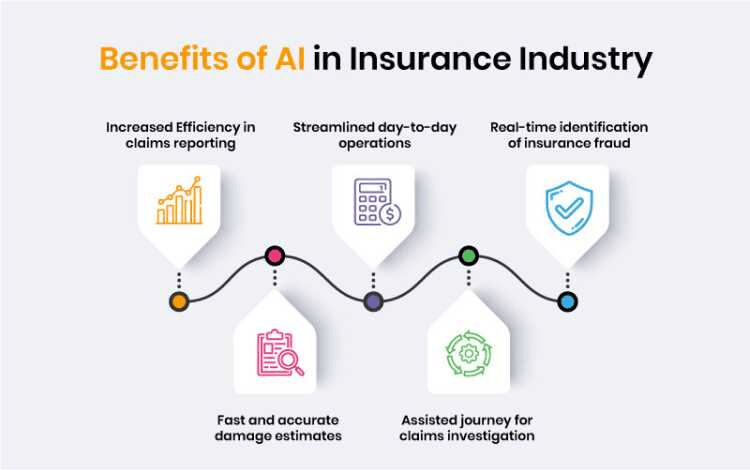
Fraud detection is another area where generative AI is making a significant impact in the insurance industry. By analyzing patterns in claims data, transaction histories, and other relevant information, AI models can identify suspicious activities and flag potentially fraudulent claims in real-time.
Moreover, generative AI can generate synthetic data to simulate various fraud scenarios, allowing insurers to train their detection algorithms more effectively and stay ahead of evolving fraud tactics. This proactive approach not only helps insurers minimize losses but also deters fraudsters and protects honest policyholders.
Product Innovation and Development
Generative AI is also driving innovation in insurance product development, enabling insurers to create new offerings tailored to emerging risks and changing customer needs. By analyzing market trends, consumer behavior, and technological advancements, AI-powered systems can generate insights and recommendations for new insurance products, coverage options, and pricing models.
Furthermore, generative AI can facilitate rapid prototyping and iteration, allowing insurers to experiment with different product configurations and features in virtual environments before launching them to market. This agile approach reduces time-to-market and enables insurers to adapt quickly to evolving customer demands and competitive pressures.
Conclusion
Generative AI is reshaping the insurance industry by offering innovative solutions to longstanding challenges and unlocking new opportunities for growth and differentiation. From risk assessment and underwriting to customer engagement and fraud detection, generative AI is revolutionizing every aspect of the insurance value chain, enabling insurers to deliver more personalized, efficient, and secure products and services to their customers. However, realizing the full potential of generative AI requires careful consideration of ethical, legal, and technical challenges, as well as ongoing investment in talent, technology, and governance frameworks. By embracing generative AI and harnessing its transformative power, insurers can position themselves for long-term success in an increasingly digital and data-driven world.
 Tech Business
Leave a comment