Introduction
In today’s dynamic regulatory environment, businesses across industries face increasing pressure to ensure compliance with a multitude of laws and standards. Traditional compliance processes often struggle to keep pace with the ever-evolving regulatory landscape, leading to inefficiencies, errors, and compliance gaps. However, the emergence of generative artificial intelligence (AI) is revolutionizing the way organizations approach compliance. By leveraging advanced algorithms and data analytics, generative AI offers a powerful solution to streamline compliance efforts and mitigate risk. This article explores the transformative potential of generative AI for compliance and its implications for businesses.
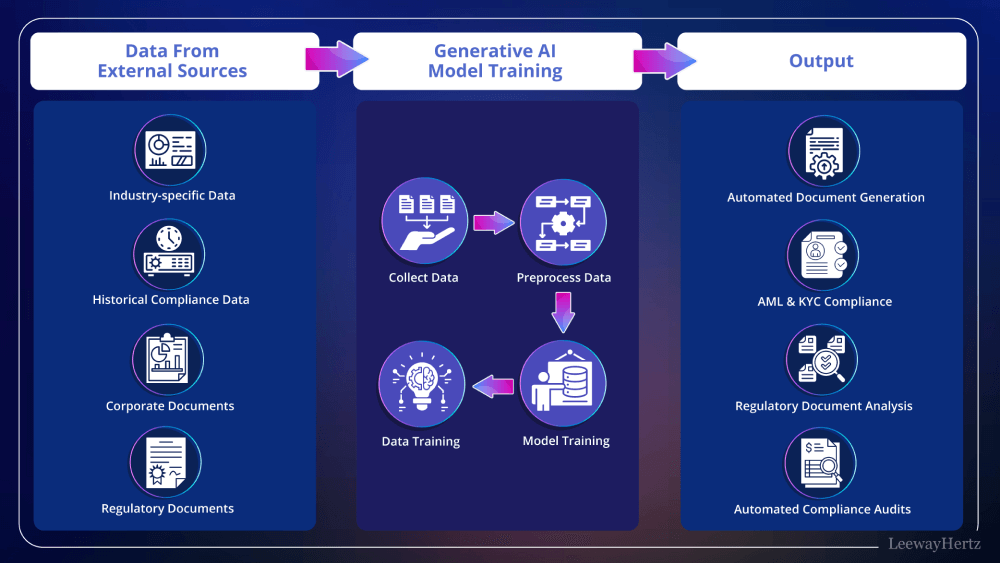
Understanding Generative AI
Generative AI refers to a subset of artificial intelligence techniques that enable machines to generate new content, such as text, images, or even code, that resembles authentic human-created content. Unlike traditional rule-based systems, generative AI learns from vast amounts of data to generate outputs that exhibit creativity and complexity. This technology is powered by deep learning algorithms, including recurrent neural networks (RNNs) and generative adversarial networks (GANs), which enable machines to understand patterns and generate novel content autonomously.
Enhancing Regulatory Compliance with Generative AI
Generative AI holds immense potential to enhance regulatory compliance across various domains:
- Automated Risk Assessment: Generative AI for compliance uses algorithms can analyze large volumes of regulatory documents, legal texts, and compliance guidelines to identify potential risks and compliance gaps. By automating risk assessment processes, organizations can proactively address compliance issues and mitigate regulatory risks before they escalate.
- Policy Generation and Interpretation: Generative AI can assist organizations in developing and interpreting complex compliance policies and procedures. By analyzing regulatory requirements and organizational data, AI algorithms can generate customized policies tailored to specific business needs while ensuring alignment with legal and regulatory frameworks.
- Real-time Monitoring and Surveillance: Generative AI-powered surveillance systems can monitor transactions, communications, and other activities in real-time to detect potential compliance violations. By analyzing patterns and anomalies, AI algorithms can alert compliance teams to suspicious behavior and facilitate timely intervention to prevent regulatory breaches.
- Training and Education: Generative AI can play a crucial role in training employees on compliance policies, procedures, and ethical standards. By generating interactive learning materials, simulations, and case studies, AI-powered training programs can enhance employee engagement and knowledge retention while promoting a culture of compliance within the organization.
- Predictive Analytics: Generative AI algorithms can leverage historical data and regulatory trends to predict future compliance requirements and anticipate potential regulatory changes. By providing actionable insights, AI-powered predictive analytics can enable organizations to stay ahead of regulatory developments and adapt their compliance strategies accordingly.
Challenges and Considerations
While generative AI offers significant benefits for compliance, several challenges and considerations must be addressed:
- Ethical and Legal Implications: The use of generative AI for compliance raises ethical and legal concerns, particularly regarding data privacy, bias, and accountability. Organizations must ensure transparency, fairness, and compliance with regulatory requirements when deploying AI-powered compliance solutions.
- Data Quality and Integrity: The effectiveness of generative AI algorithms relies on the quality and integrity of the underlying data. Organizations must maintain high-quality data and implement robust data governance processes to ensure the accuracy and reliability of AI-generated insights.
- Human-AI Collaboration: Generative AI should complement, rather than replace, human expertise in compliance management. Collaboration between AI systems and human experts is essential to ensure the ethical use of AI and to address complex compliance challenges that require human judgment and decision-making.
- Adaptability and Scalability: Generative AI algorithms must be adaptable and scalable to accommodate evolving regulatory requirements and business needs. Organizations should invest in continuous research and development to enhance the capabilities of AI-powered compliance solutions and keep pace with regulatory changes.
Conclusion
Generative AI represents a paradigm shift in the field of regulatory compliance, offering unprecedented opportunities to streamline processes, mitigate risks, and enhance compliance effectiveness. By harnessing the power of advanced algorithms and data analytics, organizations can transform their compliance efforts and navigate the complex regulatory landscape with confidence. However, to fully realize the potential of generative AI for compliance, organizations must address ethical, legal, and technical considerations and foster a culture of responsible AI adoption. With the right approach, generative AI has the potential to revolutionize compliance management and drive sustainable business success in an increasingly regulated world.
 Tech Business
Leave a comment