Introduction:
In the digital age, enterprises are constantly seeking innovative solutions to stay ahead in a competitive landscape. Generative AI architecture emerges as a game-changer, offering unprecedented capabilities to transform business operations. From advanced frameworks to industry-specific applications, let’s delve into the transformative potential of generative AI architecture for enterprises.
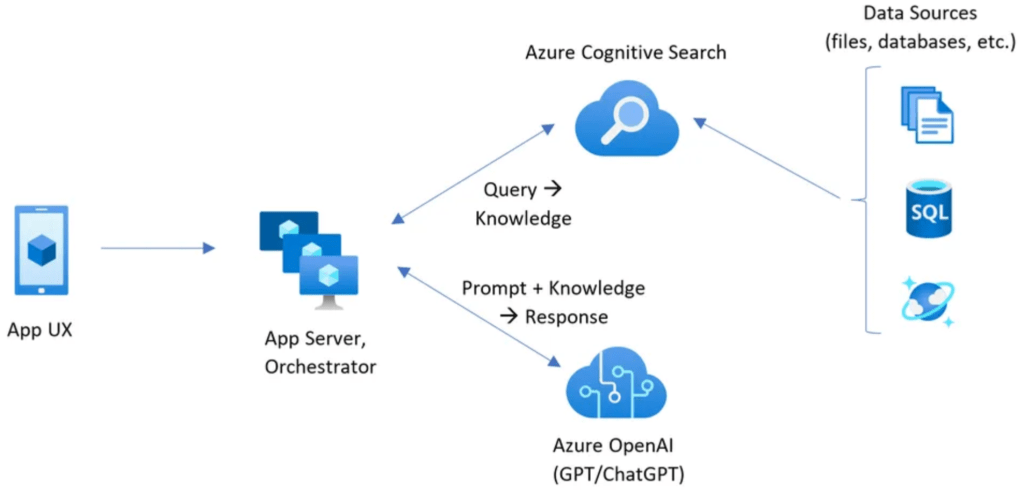
Understanding Generative AI Architecture:
Generative AI architecture encompasses a set of algorithms and frameworks designed to generate new data samples or outputs that mimic real-world phenomena. At its core, this architecture leverages deep learning techniques to create content such as text, images, and even music. Unlike traditional AI models that rely on predefined rules, generative AI architecture learns patterns from vast datasets, enabling it to produce novel and creative outputs.
Key Components of Generative AI Architecture:
Pre-trained Models:
- Large Language Models (LLMs) like GPT (Generative Pre-trained Transformer) serve as the foundation of generative AI architecture. These models are pre-trained on massive datasets, allowing them to understand and generate human-like text.
- Image Generative Models: Architectures such as GANs (Generative Adversarial Networks) and VAEs (Variational Autoencoders) enable the generation of realistic images, revolutionizing industries like fashion, gaming, and design.
Frameworks:
- Research-oriented frameworks like RAG (Retrieval-Augmented Generation) facilitate advanced natural language understanding and generation tasks. By combining retrieval-based methods with generative models, RAG enables more contextually relevant and coherent outputs.
- TensorFlow and PyTorch provide flexible and scalable environments for building and deploying generative AI solutions. These frameworks empower developers to experiment with various architectures and algorithms, driving innovation in enterprise applications.
Transformative Applications in Enterprises:
Content Generation:
- Marketing and Advertising: Generative AI architecture automates content creation processes, generating compelling ad copy, product descriptions, and visual assets.
- Content Personalization: Enterprises leverage generative AI to deliver personalized content experiences, enhancing customer engagement and retention.
Virtual Assistants and Customer Service:
- Chatbots: Powered by generative AI architecture, chatbots offer conversational experiences that simulate human interactions. Enterprises deploy chatbots for customer support, sales assistance, and troubleshooting, improving operational efficiency and customer satisfaction.
- Virtual Assistants: Generative AI-driven virtual assistants like Siri and Alexa streamline task automation, scheduling, and information retrieval, empowering employees to focus on high-value activities.
Data Augmentation and Synthesis:
- Data Generation: Generative AI architecture synthesizes realistic datasets for training machine learning models, addressing data scarcity and privacy concerns.
- Augmented Reality (AR) and Virtual Reality (VR): Enterprises leverage generative AI to create immersive AR/VR experiences, enabling virtual product demonstrations, training simulations, and architectural visualization.
Creative Design and Innovation:
- Fashion and Design: Generative AI architecture fuels creativity in industries like fashion and design, generating novel patterns, styles, and concepts. Designers use AI-generated content as inspiration for creating unique and trend-setting products.
- Product Innovation: Enterprises harness generative AI to ideate and prototype new products, accelerating the innovation cycle and fostering competitive advantage in dynamic markets.
Challenges and Considerations:
While generative AI architecture offers immense potential, enterprises must navigate certain challenges and considerations:
- Ethical and Bias Concerns: AI-generated content may perpetuate biases present in training data, necessitating ethical guidelines and bias mitigation strategies.
- Quality Assurance: Ensuring the quality and accuracy of AI-generated outputs is crucial, requiring robust validation and testing processes.
- Regulatory Compliance: Enterprises must adhere to data privacy regulations and intellectual property laws when deploying generative AI solutions, safeguarding sensitive information and proprietary assets.
Future Outlook and Opportunities:
As generative AI architecture continues to evolve, enterprises can expect:
- Enhanced Creativity and Innovation: Generative AI will empower enterprises to explore new frontiers of creativity and innovation, driving breakthroughs in product design, content creation, and customer experiences.
- Democratization of AI: Advancements in generative AI architecture will democratize access to AI-powered tools and capabilities, enabling businesses of all sizes to leverage the transformative potential of AI.
- Human-AI Collaboration: Generative AI will facilitate seamless collaboration between humans and machines, augmenting human creativity and problem-solving abilities across diverse domains.
Conclusion:
Generative AI architecture represents a paradigm shift in how enterprises harness the power of artificial intelligence. By leveraging advanced frameworks and pre-trained models, businesses can unlock new opportunities for innovation, efficiency, and differentiation. As we journey into the era of AI-driven transformation, embracing generative AI architecture will be key to staying ahead in a rapidly evolving digital landscape.
 Tech Business
Leave a comment