Introduction:
In the fast-paced world of logistics and supply chain management, efficiency is key. With the advent of Artificial Intelligence (AI), the industry is experiencing a transformative shift. AI in logistics and supply chain is streamlining operations, optimizing routes, and enhancing decision-making processes like never before. Let’s delve into how AI is reshaping this critical sector.
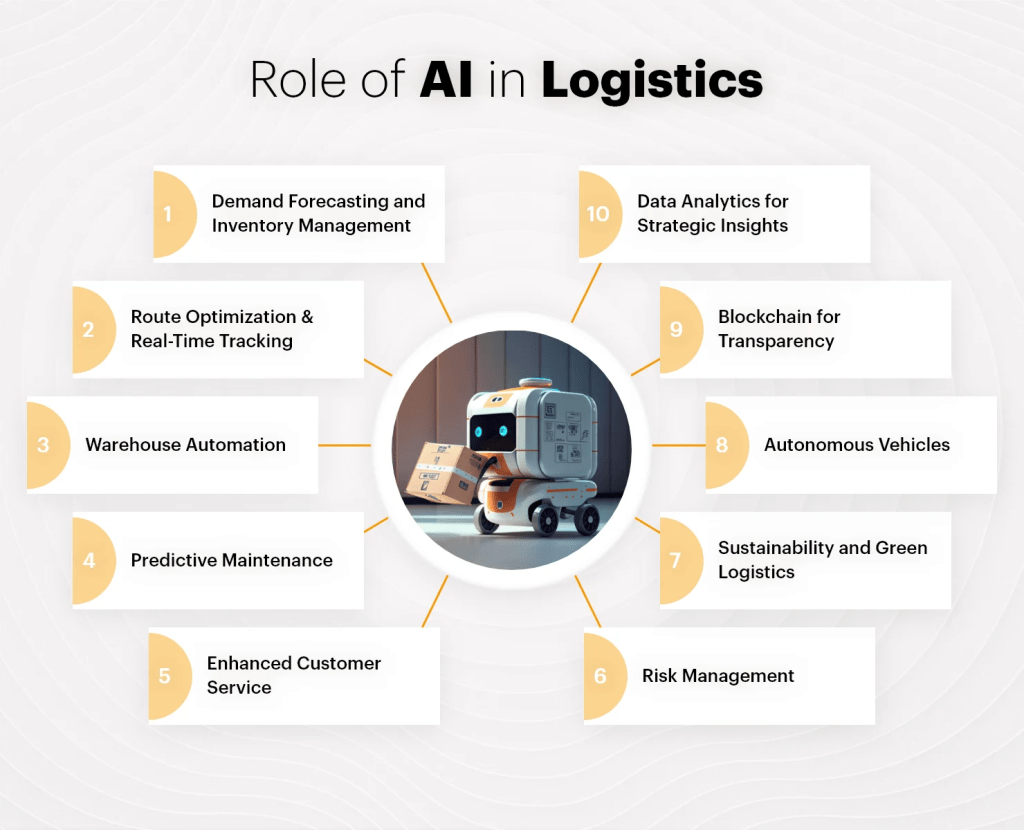
- Enhanced Demand Forecasting:
Accurate demand forecasting is the cornerstone of efficient supply chain management. AI algorithms analyze historical data, market trends, and external factors to predict demand with remarkable precision. By harnessing AI in logistics and supply chain, companies can anticipate fluctuations in demand, optimize inventory levels, and minimize stockouts or excess inventory. - Smart Inventory Management:
Managing inventory efficiently is a perennial challenge for logistics professionals. AI-powered systems analyze real-time data to optimize inventory levels, reducing carrying costs and minimizing the risk of stockouts. These systems also factor in variables like lead times, supplier reliability, and seasonal demand patterns to ensure optimal inventory management strategies. - Predictive Maintenance:
Equipment downtime can significantly disrupt supply chain operations and incur substantial costs. AI-enabled predictive maintenance systems monitor equipment health in real-time, analyzing data from sensors to detect anomalies and predict potential failures before they occur. By preemptively addressing maintenance issues, companies can minimize downtime, improve asset utilization, and enhance overall operational efficiency. - Route Optimization:
Optimizing transportation routes is essential for minimizing fuel consumption, reducing transportation costs, and ensuring timely deliveries. AI algorithms consider various factors such as traffic conditions, weather forecasts, vehicle capacity, and delivery schedules to determine the most efficient routes. By leveraging AI in logistics and supply chain, companies can optimize delivery routes in real-time, leading to faster deliveries and lower transportation costs. - Autonomous Vehicles:
The integration of AI-powered autonomous vehicles holds immense potential for revolutionizing logistics and supply chain operations. Self-driving trucks and drones equipped with AI technology can navigate routes autonomously, reducing the need for human intervention and increasing operational efficiency. These vehicles can operate around the clock, delivering goods faster and more reliably while minimizing labor costs. - Warehouse Automation:
AI-driven automation technologies are transforming warehouses into highly efficient, streamlined operations. Automated guided vehicles (AGVs), robotic pickers, and automated sorting systems powered by AI optimize warehouse processes, increasing throughput and reducing labor costs. These technologies enhance order accuracy, shorten order fulfillment times, and enable warehouses to handle a higher volume of orders with greater efficiency. - Supply Chain Visibility:
AI-driven supply chain visibility solutions provide real-time insights into the entire supply chain ecosystem, from suppliers to end customers. By aggregating data from various sources and applying advanced analytics, these solutions enable companies to track shipments, monitor inventory levels, and identify potential bottlenecks or disruptions proactively. Enhanced visibility allows for better decision-making, improved risk management, and greater agility in responding to changing market conditions. - Personalized Customer Experiences:
AI-powered analytics enable companies to analyze customer preferences, purchase history, and behavior patterns to deliver personalized experiences. By tailoring product recommendations, promotions, and services to individual customers, companies can enhance customer satisfaction, loyalty, and retention. AI in logistics and supply chain enables companies to meet the evolving demands of customers in an increasingly competitive market landscape.
Conclusion:
The integration of AI technologies is revolutionizing logistics and supply chain management, driving unprecedented levels of efficiency, agility, and innovation. From demand forecasting to personalized customer experiences, AI is reshaping every aspect of the supply chain ecosystem. Companies that embrace AI in logistics and supply chain stand to gain a competitive edge in today’s dynamic marketplace, positioning themselves for long-term success amidst rapid technological advancements.
 Tech Business
Leave a comment