Introduction
In the ever-evolving landscape of finance, the integration of artificial intelligence (AI) has brought about profound changes, particularly in the realm of financial modeling. AI algorithms are reshaping how analysts and institutions approach forecasting, risk assessment, and decision-making processes. This article explores the transformative impact of AI in financial modeling, highlighting key applications, benefits, and challenges.
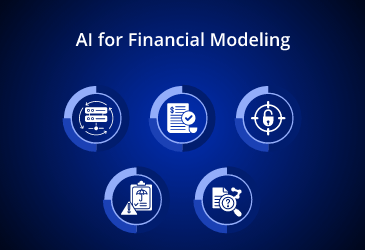
The Role of AI in Financial Modeling
Financial modeling forms the backbone of strategic decision-making in finance, providing insights into future performance based on historical data and assumptions. Traditionally, this process relied heavily on spreadsheet-based calculations and statistical models. However, the advent of AI has introduced a paradigm shift by enhancing accuracy, efficiency, and predictive capabilities.
Enhanced Accuracy Through Machine Learning
AI algorithms, particularly machine learning techniques like neural networks and deep learning, excel in analyzing vast datasets to identify complex patterns and correlations. In financial modeling, this translates to more accurate forecasts and risk assessments. For instance, AI can analyze market trends, customer behavior, and economic indicators simultaneously, providing comprehensive insights that surpass traditional models.
Improving Efficiency and Speed
One of the most significant advantages of AI in financial modeling is its ability to automate repetitive tasks and calculations. This automation not only saves time but also reduces errors inherent in manual processes. Tasks such as data entry, portfolio rebalancing, and scenario analysis can now be performed swiftly and accurately with AI-powered tools, allowing financial analysts to focus on strategic decision-making rather than routine calculations.
Predictive Analytics and Decision Support
AI enhances predictive analytics by continuously learning from new data inputs and adjusting models accordingly. This dynamic adaptation improves the relevance and reliability of forecasts in rapidly changing market conditions. Moreover, AI-driven decision support systems can simulate various scenarios and assess their potential impacts on portfolios or investments, enabling more informed decision-making processes.
Risk Management and Compliance
In finance, managing risk is paramount. AI contributes significantly to risk management by analyzing historical data to identify potential risks and predict their likelihood. By integrating AI into risk models, financial institutions can proactively mitigate risks, comply with regulatory requirements, and enhance overall stability. Moreover, AI algorithms can detect anomalies or suspicious activities in real-time, bolstering security and fraud prevention measures.
Challenges and Considerations
Despite its transformative potential, AI in financial modeling also presents challenges. One major concern is the interpretability of AI models, as complex algorithms may obscure the reasoning behind specific predictions or decisions. This opacity can pose challenges in regulatory compliance and stakeholder trust. Additionally, data privacy and security remain critical issues, requiring robust measures to protect sensitive financial information from breaches or misuse.
Ethical Implications and Bias
Another critical consideration is the potential for bias in AI models, which can inadvertently perpetuate inequalities or unfair practices. For instance, biased data inputs can lead to discriminatory outcomes in lending decisions or investment strategies. Addressing these ethical implications requires careful attention to data selection, model transparency, and continuous monitoring to ensure fairness and accountability in AI-driven financial modeling.
Future Directions and Innovations
Looking ahead, the evolution of AI in financial modeling is poised to continue rapidly. Advancements in natural language processing (NLP) and predictive analytics will further refine AI capabilities, enabling deeper insights and more sophisticated decision-making tools. Moreover, the integration of AI with blockchain technology holds promise for enhancing transparency, security, and efficiency in financial transactions.
Conclusion
AI has revolutionized financial modeling by enhancing accuracy, efficiency, and predictive capabilities across various applications in finance. From risk management to decision support systems, AI-driven innovations are reshaping how financial institutions analyze data, assess risks, and make strategic decisions. While challenges such as interpretability and bias must be addressed, the transformative potential of AI in financial modeling promises continued innovation and efficiency in the financial industry.
In summary, AI in financial modeling represents a pivotal advancement that not only improves operational efficiencies but also empowers financial professionals with deeper insights and more informed decision-making capabilities in an increasingly complex global market.
 Tech Business
Leave a comment