Demand forecasting has always been a crucial component of business strategy. Traditionally reliant on historical data and human intuition, this field has undergone a significant transformation with the advent of artificial intelligence (AI). AI in demand forecasting offers unparalleled accuracy, efficiency, and adaptability, making it an indispensable tool for modern businesses. This article delves into how AI is reshaping demand forecasting and the benefits it brings to the table.
The Evolution of Demand Forecasting
Traditional Methods
Before the integration of AI, demand forecasting was primarily based on statistical methods such as moving averages, exponential smoothing, and regression analysis. These techniques, while useful, had limitations. They often struggled with large datasets, seasonal variations, and sudden market changes. Human intuition and experience played a significant role, but this introduced a level of subjectivity and potential bias.
The AI Revolution
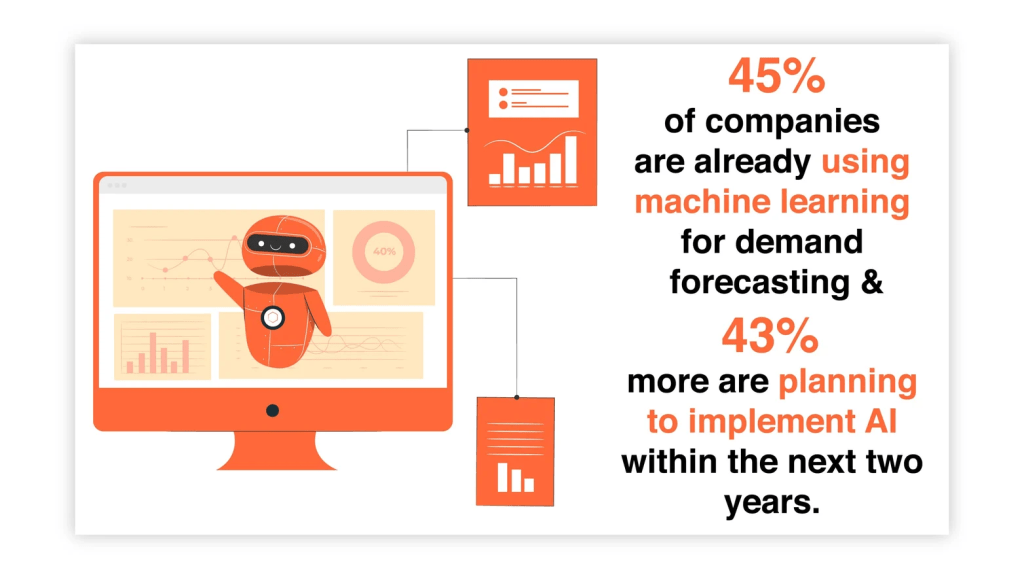
AI in demand forecasting represents a paradigm shift. Leveraging machine learning algorithms, AI can analyze vast amounts of data from multiple sources in real-time. This capability allows for more accurate predictions by identifying patterns and trends that traditional methods might miss. Additionally, AI continuously learns and adapts, improving its accuracy over time.
Key Components of AI in Demand Forecasting
Machine Learning Algorithms
Machine learning (ML) is the backbone of AI-driven demand forecasting. Algorithms such as neural networks, decision trees, and support vector machines analyze historical sales data, market trends, and external factors (like weather conditions or economic indicators) to predict future demand. These algorithms can process and learn from enormous datasets, identifying complex relationships and patterns.
Big Data Integration
AI thrives on data. The integration of big data into demand forecasting means AI can utilize information from various sources such as social media, market reports, and even competitor performance. This holistic view provides a more comprehensive and accurate forecast, allowing businesses to make informed decisions.
Real-Time Analysis
One of the standout features of AI in demand forecasting is its ability to perform real-time analysis. Traditional methods often relied on periodic reviews and updates, which could lead to outdated forecasts. AI, however, can continuously update its predictions as new data becomes available, ensuring businesses always have the most current information.
Benefits of AI in Demand Forecasting
Improved Accuracy
The primary advantage of AI in demand forecasting is its enhanced accuracy. By analyzing vast amounts of data and recognizing patterns beyond human capability, AI produces more reliable forecasts. This accuracy translates to better inventory management, reduced waste, and optimized supply chains.
Increased Efficiency
AI automates the demand forecasting process, reducing the time and effort required by human analysts. This efficiency allows businesses to allocate resources more effectively and focus on strategic decision-making rather than data crunching.
Scalability
AI systems can easily scale to accommodate growing data volumes and expanding business operations. Whether a company is operating locally or globally, AI can handle the increased complexity without compromising on accuracy or speed.
Risk Mitigation
Accurate demand forecasting helps businesses anticipate market changes and potential disruptions. AI can identify emerging trends and alert businesses to shifts in consumer behavior, enabling proactive measures to mitigate risks. This foresight is invaluable in maintaining a competitive edge.
Cost Reduction
By optimizing inventory levels and reducing excess stock, AI in demand forecasting can significantly cut costs. Businesses can avoid overproduction, minimize storage expenses, and reduce markdowns on unsold products. This cost efficiency contributes directly to the bottom line.
Real-World Applications
Retail
In the retail sector, AI-driven demand forecasting helps manage inventory, plan promotions, and optimize pricing strategies. Retailers can ensure they have the right products at the right time, enhancing customer satisfaction and boosting sales.
Manufacturing
Manufacturers use AI to forecast demand for raw materials and finished goods. This allows for better production planning, reducing lead times, and minimizing stockouts or overproduction. AI also aids in predictive maintenance, ensuring machinery operates efficiently.
Supply Chain Management
AI enhances the entire supply chain by providing accurate demand forecasts. This leads to better coordination among suppliers, manufacturers, and retailers, resulting in a more responsive and efficient supply chain. Companies can reduce lead times, improve order fulfillment rates, and enhance overall supply chain resilience.
Challenges and Considerations
Data Quality
The effectiveness of AI in demand forecasting heavily depends on the quality of the data. Inaccurate or incomplete data can lead to flawed forecasts. Businesses must ensure they have robust data collection and management practices in place.
Implementation Costs
While AI offers long-term benefits, the initial implementation can be costly. Businesses need to invest in technology, training, and integration. However, the return on investment often justifies the upfront expenses.
Ethical and Privacy Concerns
AI systems handle vast amounts of personal and business data, raising ethical and privacy concerns. Companies must adhere to data protection regulations and ensure transparent data usage policies to maintain customer trust.
Conclusion
AI in demand forecasting is revolutionizing how businesses predict and respond to market demands. Its ability to analyze large datasets, provide real-time insights, and continuously improve makes it an invaluable asset. As AI technology continues to advance, its impact on demand forecasting will only grow, offering businesses unprecedented levels of accuracy, efficiency, and strategic advantage. Embracing AI in demand forecasting is not just a competitive edge—it’s becoming a necessity in the modern business landscape.
 Tech Business
Leave a comment