Introduction
Artificial Intelligence (AI) is transforming various sectors, and wealth management is no exception. AI in wealth management is not only enhancing efficiency but also providing a personalized experience for clients. This article explores how AI is reshaping wealth management, from automating mundane tasks to offering sophisticated financial advice.
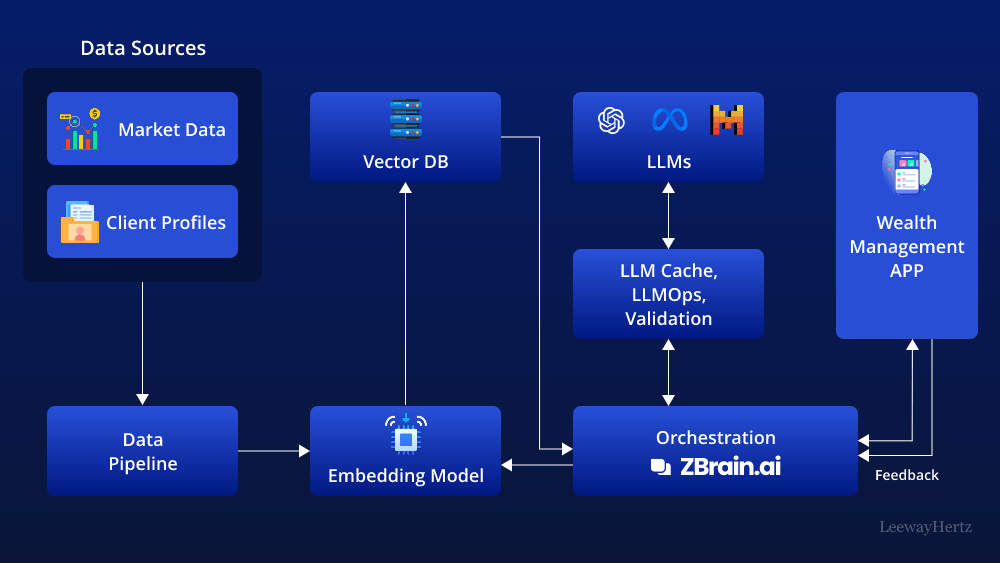
AI in Wealth Management: An Overview
AI in wealth management refers to the use of artificial intelligence technologies to manage financial portfolios, optimize investment strategies, and improve client interactions. This technology leverages machine learning, natural language processing, and data analytics to deliver insights and automate processes that were once handled manually.
Automation of Routine Tasks
One of the most significant impacts of AI in wealth management is the automation of routine tasks. Tasks such as data entry, transaction processing, and compliance checks can be time-consuming and prone to human error. AI-driven systems can handle these tasks efficiently, freeing up time for wealth managers to focus on more strategic activities. For instance, robotic process automation (RPA) can automatically update client information, track investment performance, and ensure compliance with regulations.
Enhanced Data Analytics
AI in wealth management has greatly enhanced data analytics capabilities. AI algorithms can analyze vast amounts of financial data at incredible speeds, uncovering trends and patterns that might be missed by human analysts. This enables wealth managers to make more informed decisions. Predictive analytics, for example, can forecast market movements and investment performance, allowing for proactive strategy adjustments. This level of analysis ensures that clients’ portfolios are optimized for maximum returns while minimizing risks.
Personalized Client Experiences
Personalization is key in wealth management, and AI is making it more achievable than ever. AI systems can analyze a client’s financial behavior, goals, and preferences to provide tailored advice and solutions. Chatbots and virtual assistants, powered by natural language processing, can engage with clients in real-time, answering queries and providing recommendations based on individual needs. This personalized approach not only enhances client satisfaction but also builds stronger relationships between clients and wealth managers.
Improved Risk Management
Risk management is a critical aspect of wealth management. AI tools can assess risk more accurately by analyzing various factors that influence market volatility. Machine learning models can identify potential risks in real-time and suggest corrective actions before they impact the portfolio. This proactive approach to risk management helps protect clients’ investments and provides peace of mind.
AI-Powered Investment Strategies
AI in wealth management is also revolutionizing investment strategies. Traditional investment strategies often rely on historical data and human intuition. AI, however, can process vast amounts of data from various sources, including social media, news, and economic indicators, to identify investment opportunities. Algorithmic trading, for example, uses AI to execute trades at optimal times based on market conditions. These AI-powered strategies can outperform traditional methods by reacting to market changes more quickly and efficiently.
Enhanced Compliance and Security
Compliance and security are paramount in the financial industry. AI in wealth management helps ensure adherence to regulations and enhances security measures. AI systems can monitor transactions for suspicious activities and flag potential compliance issues. Additionally, advanced AI algorithms can detect and prevent fraudulent activities by analyzing patterns and anomalies in financial transactions. This not only safeguards clients’ assets but also enhances the overall trust in wealth management services.
Challenges and Considerations
Despite its numerous benefits, implementing AI in wealth management comes with challenges. Data privacy and security are major concerns, as financial data is highly sensitive. Wealth management firms must ensure that AI systems comply with data protection regulations and implement robust security measures to protect client information.
Another challenge is the integration of AI with existing systems. Many wealth management firms use legacy systems that may not be compatible with new AI technologies. This requires significant investment in technology upgrades and staff training to fully leverage AI capabilities.
The Future of AI in Wealth Management
The future of AI in wealth management looks promising. As AI technologies continue to evolve, we can expect even more advanced and sophisticated tools to emerge. These tools will further enhance the efficiency and effectiveness of wealth management services, providing even greater value to clients.
In the coming years, we may see the rise of fully automated wealth management platforms that can manage portfolios with minimal human intervention. These platforms will use AI to continuously monitor and adjust investment strategies based on real-time data, ensuring optimal performance at all times.
Conclusion
AI in wealth management is revolutionizing the industry by automating routine tasks, enhancing data analytics, personalizing client experiences, improving risk management, and enabling AI-powered investment strategies. While there are challenges to overcome, the benefits far outweigh the risks. As AI continues to advance, it will undoubtedly play an increasingly vital role in wealth management, driving innovation and delivering superior outcomes for clients.
 Tech Business
Leave a comment