AI-based recommendation systems are transforming how businesses interact with their customers by personalizing user experiences and improving engagement. These intelligent systems analyze user data to suggest products, services, or content tailored to individual preferences. In this article, we will explore the different types of AI-based recommendation systems, their use cases, and how they are developed and implemented.
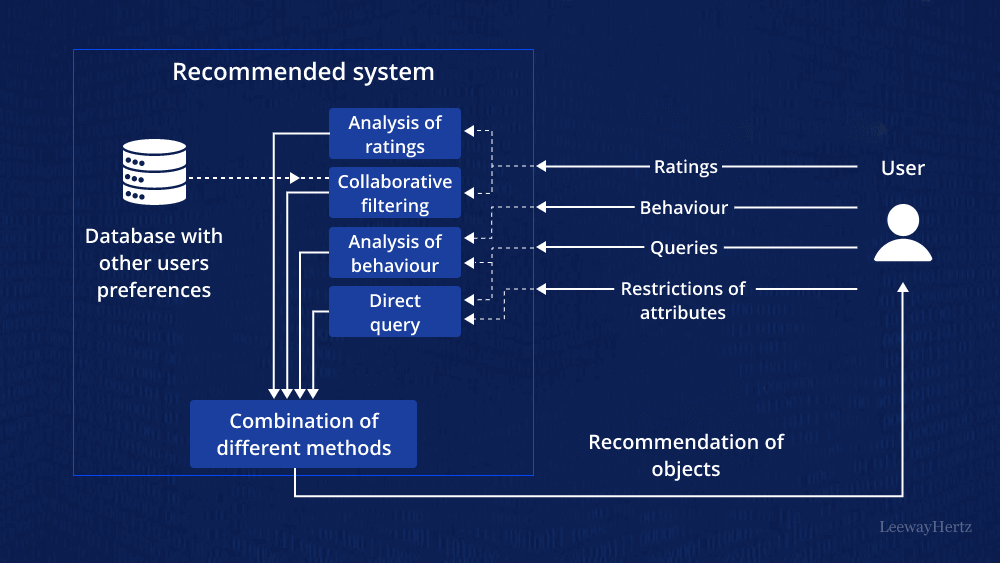
Types of AI-Based Recommendation Systems
AI-based recommendation systems come in various forms, each utilizing different methods to provide personalized suggestions. Here are the primary types:
1. Collaborative Filtering
Collaborative filtering is one of the most common types of AI-based recommendation systems. It operates on the principle that users who agree on past preferences will agree on future preferences. There are two main types:
- User-Based Collaborative Filtering: This approach recommends items by finding similar users. For example, if User A and User B have similar tastes in movies, User A might receive movie recommendations based on what User B has liked.
- Item-Based Collaborative Filtering: This method focuses on finding similarities between items. For example, if many users who like Item X also like Item Y, then Item Y might be recommended to users who liked Item X.
2. Content-Based Filtering
Content-based filtering makes recommendations based on the attributes of items and users’ preferences. It analyzes the content of items (such as product descriptions or movie genres) and matches them to user profiles. For instance, if a user frequently watches action movies, the system will suggest other action films.
3. Hybrid Recommendation Systems
Hybrid recommendation systems combine collaborative filtering and content-based filtering to enhance accuracy. By leveraging both methods, these systems can overcome the limitations of each approach individually. For example, a hybrid system might recommend a product based on both user preferences and similar items.
4. Knowledge-Based Recommendation Systems
Knowledge-based systems make recommendations based on explicit knowledge about users’ preferences and needs. They do not rely on past behavior but rather use detailed user input and domain knowledge. For example, a knowledge-based system might recommend a specific type of software based on the user’s professional requirements.
Use Cases of AI-Based Recommendation Systems
AI-based recommendation systems are widely applied across various industries. Here are some prominent use cases:
1. E-Commerce
In e-commerce, AI-based recommendation systems enhance the shopping experience by suggesting products based on users’ browsing and purchase history. For instance, Amazon’s recommendation engine suggests products that users are likely to buy, increasing sales and customer satisfaction.
2. Streaming Services
Streaming platforms like Netflix and Spotify use AI-based recommendation systems to suggest movies, shows, and music tailored to users’ preferences. By analyzing viewing or listening history, these systems provide personalized content, keeping users engaged and subscribed.
3. Social Media
Social media platforms utilize recommendation systems to curate feeds and suggest connections. For example, Facebook’s algorithm recommends friends, groups, and pages based on users’ interactions and interests.
4. Online Advertising
In online advertising, AI-based recommendation systems help target ads more effectively. By analyzing user behavior and preferences, these systems display ads that are relevant to the individual, improving the chances of conversion.
5. Healthcare
In healthcare, recommendation systems can suggest personalized treatment plans or relevant medical articles based on patient data and medical history. These systems help in providing better patient care and support.
Development of AI-Based Recommendation Systems
Developing an AI-based recommendation system involves several key steps:
1. Data Collection
The first step is collecting data relevant to users and items. This can include user preferences, behavior data, item attributes, and contextual information. Quality data is crucial for training effective recommendation models.
2. Data Preprocessing
Data preprocessing involves cleaning and transforming raw data into a format suitable for analysis. This step may include handling missing values, normalizing data, and feature extraction.
3. Model Selection
Choosing the right model is essential. Depending on the type of recommendation system, different algorithms can be used, such as matrix factorization for collaborative filtering or content-based models using natural language processing (NLP) for analyzing item descriptions.
4. Model Training
In this step, the selected model is trained using historical data. Training involves adjusting the model parameters to minimize errors and improve the accuracy of recommendations.
5. Evaluation
Evaluating the recommendation system is crucial to ensure its effectiveness. Metrics such as precision, recall, and user satisfaction are used to assess how well the system performs.
6. Deployment and Monitoring
Once the model is trained and evaluated, it is deployed in a production environment. Continuous monitoring is necessary to ensure the system remains accurate and relevant as user preferences and item attributes evolve.
Implementation of AI-Based Recommendation Systems
Implementing an AI-based recommendation system involves integrating it into existing platforms and workflows. Here are key considerations for successful implementation:
1. Integration with Existing Systems
The recommendation system must be seamlessly integrated with the existing platform, whether it is an e-commerce site, streaming service, or social media platform. This integration ensures that recommendations are delivered effectively to users.
2. Scalability
The system should be scalable to handle large volumes of data and user interactions. Cloud-based solutions and distributed computing can support scalability.
3. User Privacy
Ensuring user privacy is essential. The system should comply with data protection regulations and implement measures to safeguard personal information.
4. Continuous Improvement
AI-based recommendation systems should be continuously improved based on user feedback and changing trends. Regular updates and retraining of models help maintain accuracy and relevance.
In conclusion, AI-based recommendation systems are powerful tools that enhance user experiences across various domains. By understanding their types, use cases, and development processes, businesses can effectively implement these systems to drive engagement and satisfaction.
 Tech Business
Leave a comment