Generative AI in healthcare is revolutionizing the medical field, offering unprecedented opportunities for improvement and efficiency. This technology is not just a buzzword but a significant advancement with the potential to reshape patient care, diagnosis, and treatment methods. Here’s a closer look at how generative AI is making waves in the healthcare industry.
1. Understanding Generative AI in Healthcare
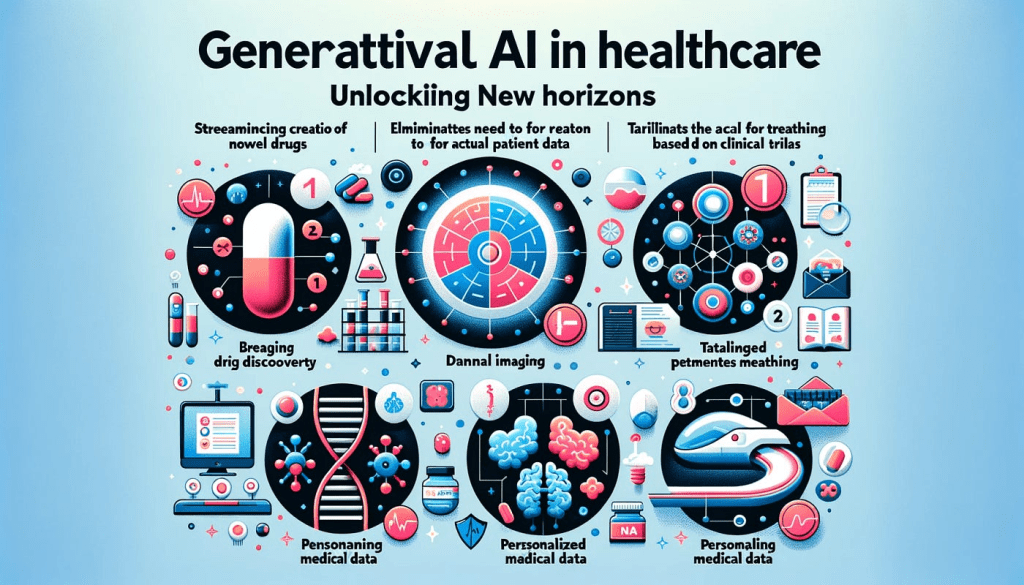
Generative AI in healthcare refers to the use of artificial intelligence systems that can create new data, models, or solutions based on existing information. Unlike traditional AI, which might analyze or interpret existing data, generative AI goes a step further by producing novel outputs that can be applied to solve complex healthcare problems. This technology leverages machine learning algorithms to generate useful predictions, simulate medical conditions, or create innovative treatment options.
2. Enhancing Diagnostic Accuracy with Generative AI
One of the most significant benefits of generative AI in healthcare is its ability to enhance diagnostic accuracy. By analyzing vast amounts of medical data, including patient records and imaging results, generative AI can help identify patterns that might be missed by human practitioners. For example, AI algorithms can generate synthetic medical images to train diagnostic tools, improving their ability to detect anomalies such as tumors or fractures. This can lead to earlier and more accurate diagnoses, ultimately improving patient outcomes.
3. Personalizing Treatment Plans
Generative AI in healthcare is also playing a crucial role in personalizing treatment plans. By creating models based on individual patient data, generative AI can help design tailored treatment strategies that are more effective and less likely to cause adverse effects. For instance, generative AI can simulate how a patient might respond to different drugs or therapies, allowing healthcare providers to choose the best course of action for each individual. This personalized approach enhances the efficacy of treatments and can lead to better patient satisfaction.
4. Accelerating Drug Discovery
Drug discovery is a time-consuming and expensive process, but generative AI in healthcare is accelerating this crucial phase. AI models can generate new chemical compounds and predict their potential efficacy based on existing knowledge. This capability significantly speeds up the identification of promising drug candidates and reduces the need for extensive laboratory testing. As a result, new treatments can reach the market faster, benefiting patients with conditions that currently have limited therapeutic options.
5. Improving Patient Engagement and Communication
Generative AI is also transforming patient engagement and communication. AI-driven chatbots and virtual assistants can interact with patients, providing answers to common questions, scheduling appointments, and offering reminders for medication adherence. These tools use generative AI to understand and respond to patient queries effectively, making healthcare more accessible and convenient. Enhanced communication can lead to better patient compliance and overall satisfaction with healthcare services.
6. Revolutionizing Medical Research
In medical research, generative AI in healthcare is enabling researchers to analyze and interpret complex datasets more effectively. AI algorithms can generate new hypotheses and insights by identifying hidden correlations within large datasets. This capability helps researchers explore new avenues of study and make breakthroughs in understanding diseases, leading to innovative treatment methods and public health strategies.
7. Ethical Considerations and Challenges
Despite its potential, the application of generative AI in healthcare comes with ethical considerations and challenges. Data privacy is a major concern, as AI systems require access to sensitive patient information. Ensuring that this data is handled securely and in compliance with regulations is crucial. Additionally, there is the challenge of ensuring that AI-generated recommendations are accurate and unbiased. Ongoing efforts to address these issues are essential to maximize the benefits of generative AI while minimizing risks.
8. The Future of Generative AI in Healthcare
Looking ahead, the future of generative AI in healthcare is promising. As technology continues to advance, we can expect even more sophisticated applications that further enhance diagnostic capabilities, treatment personalization, and medical research. Integrating generative AI with other emerging technologies, such as genomics and robotics, holds the potential to drive even greater innovations in healthcare. Continued research and development in this field will be key to unlocking its full potential and transforming the way we approach patient care.
Conclusion
Generative AI in healthcare is a transformative technology with the power to significantly improve various aspects of medical practice. From enhancing diagnostic accuracy and personalizing treatment plans to accelerating drug discovery and improving patient communication, the impact of generative AI is profound. As the technology continues to evolve, its role in healthcare will likely expand, offering new opportunities for improving patient outcomes and advancing medical science. Embracing and effectively integrating generative AI into healthcare systems will be crucial for realizing its full potential and shaping the future of medicine.
 Tech Business
Leave a comment