Introduction
In today’s data-driven world, businesses and individuals are increasingly turning to Large Language Models (LLMs) to enhance productivity and decision-making. If you’re interested in having your own tailored LLM, knowing how to build a private LLM can be a game-changer. This guide will walk you through the essential steps to create a private LLM that meets your specific needs.
Understanding the Basics
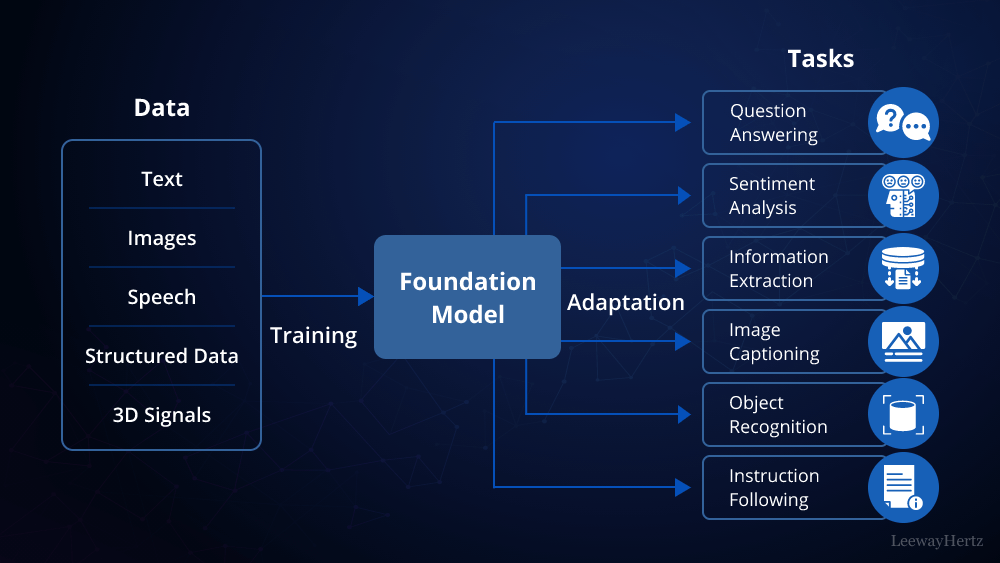
Before diving into the process, it’s crucial to understand what is a private LLM and why it might be advantageous. A private LLM is a customized version of a large language model that is trained and deployed in a private environment. Unlike public models, a private LLM can be fine-tuned to cater to particular industry needs, ensuring data security and compliance.
1. Define Your Objectives
The first step in building a private LLM is to define your objectives. Ask yourself what specific tasks you want the model to perform. Are you interested in enhancing customer service with chatbots, automating content generation, or analyzing large volumes of text? Clearly outlining your goals will guide the subsequent steps in the development process.
2. Choose the Right Model Architecture
Selecting the appropriate model architecture is a crucial decision. Popular architectures for LLMs include GPT (Generative Pre-trained Transformer), BERT (Bidirectional Encoder Representations from Transformers), and T5 (Text-To-Text Transfer Transformer). Each has its strengths, so choose one that aligns with your objectives. For instance, GPT is well-suited for text generation, while BERT excels in understanding context.
3. Gather and Prepare Your Data
Data is the backbone of any LLM. To build a private LLM, you need a substantial amount of high-quality data relevant to your domain. This data can come from various sources, including internal documents, customer interactions, or industry-specific datasets. Ensure the data is cleaned and preprocessed to remove any inconsistencies or irrelevant information.
4. Train Your Model
Training a model involves feeding it your data so it can learn patterns and generate accurate outputs. This step typically requires powerful computing resources and specialized software. If you’re unfamiliar with the technical details, consider using cloud-based services that offer pre-configured environments for LLM training. These platforms often come with user-friendly interfaces and extensive documentation to help you through the process.
5. Fine-Tune Your Model
Once the base model is trained, the next step is fine-tuning. This involves adjusting the model’s parameters to improve its performance on specific tasks. Fine-tuning helps the model adapt to the nuances of your data and achieve better accuracy. During this phase, you can also incorporate domain-specific terminology and adjust the model’s responses to align with your requirements.
6. Evaluate and Test
Before deploying your private LLM, thorough evaluation and testing are essential. Assess the model’s performance using various metrics, such as accuracy, precision, and recall. You should also test the model in real-world scenarios to ensure it meets your objectives and performs well under different conditions. Gathering feedback from end-users can provide valuable insights for further improvements.
7. Deploy and Maintain
With your model trained, fine-tuned, and tested, you’re ready to deploy it. Choose a deployment platform that suits your needs, whether it’s an on-premises server, a cloud-based solution, or an edge device. Ensure that you have robust security measures in place to protect your data and model from unauthorized access. Additionally, establish a maintenance plan to regularly update the model and address any issues that arise.
8. Monitor and Iterate
Building a private LLM is not a one-time task but an ongoing process. Continuously monitor the model’s performance and gather feedback from users to identify areas for improvement. Iterative updates and retraining can help keep the model relevant and effective as your needs evolve and new data becomes available.
Conclusion
Learning how to build a private LLM can offer significant advantages in terms of customization, data security, and efficiency. By following these steps, you can create a powerful tool tailored to your specific needs. From defining objectives and choosing the right model architecture to training, fine-tuning, and deployment, each step is crucial in developing a private LLM that delivers outstanding performance. Embrace the journey of building and refining your LLM to unlock its full potential and achieve your goals.
 Tech Business
Leave a comment