Introduction to Multimodal Models
In the rapidly evolving field of artificial intelligence, multimodal models are gaining significant attention for their ability to process and integrate information from multiple sources. These models represent a breakthrough in AI, enabling systems to understand and interpret data in a way that mimics human cognitive abilities. This article explores the concept of multimodal models, their applications, and their impact on various industries.
What Are Multimodal Models?
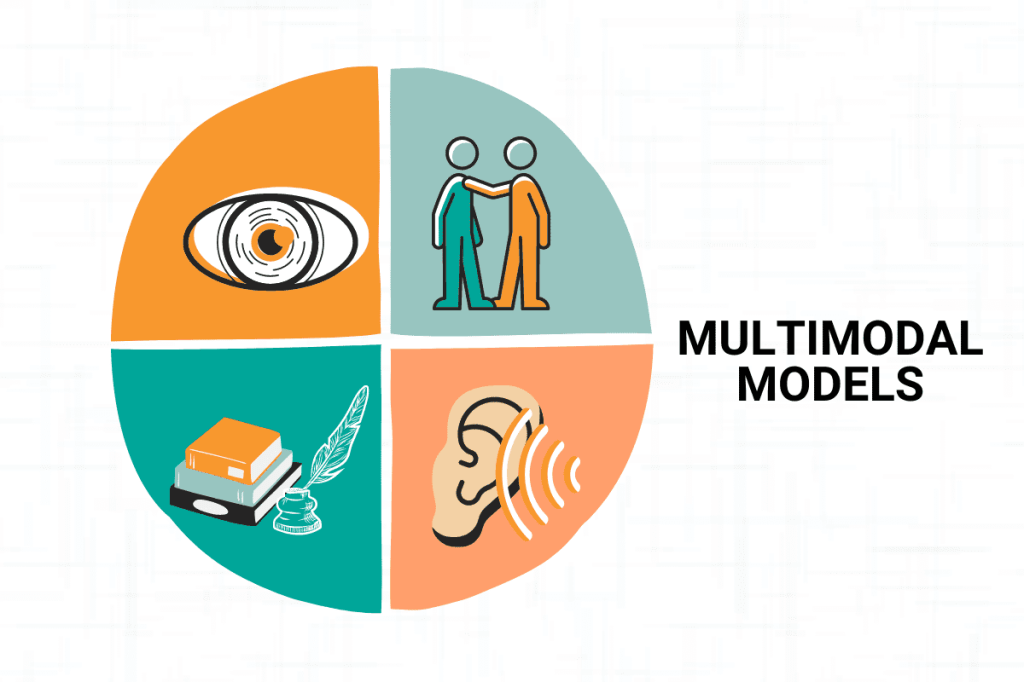
Multimodal models refer to machine learning models designed to handle and combine information from different types of data inputs. Unlike traditional models that work with a single type of data, such as text or images, multimodal models can process and integrate various data modalities simultaneously. These can include text, images, audio, and video.
For instance, a multimodal model might analyze a video by combining the visual information from the frames with the audio track to understand the context more deeply. This capability allows for richer and more nuanced data interpretation, which is crucial for complex tasks that involve multiple forms of input.
How Do Multimodal Models Work?
Multimodal models operate by using specialized algorithms that can process and integrate data from different sources. The core idea is to create a unified representation of the combined data modalities, allowing the model to leverage the strengths of each type of input.
- Data Fusion: Multimodal models start with data fusion, where inputs from different sources are combined. This can be done at various stages of the processing pipeline, including early fusion (combining raw data), late fusion (combining outputs from separate models), or hybrid fusion (a combination of both).
- Feature Extraction: After fusion, the model extracts relevant features from the integrated data. This involves using techniques such as deep learning, which helps in identifying patterns and relationships within the combined data.
- Integration and Interpretation: The extracted features are then used to build a comprehensive understanding of the data. Multimodal models use this integrated representation to perform tasks such as classification, generation, or prediction.
Applications of Multimodal Models
The versatility of multimodal models makes them applicable across various domains. Here are a few key areas where these models are making a significant impact:
- Healthcare: In healthcare, multimodal models are used to combine medical imaging (e.g., MRI scans) with patient records and genetic data. This integration helps in more accurate diagnosis, personalized treatment plans, and improved patient outcomes.
- Autonomous Vehicles: For autonomous vehicles, multimodal models integrate data from cameras, radar, lidar, and other sensors to understand the vehicle’s surroundings. This comprehensive data fusion enhances navigation, safety, and decision-making processes.
- Social Media and Content Moderation: Multimodal models help in analyzing and moderating content by combining text, images, and video data. This capability allows for more effective detection of inappropriate content and improved user experiences on social media platforms.
- Assistive Technologies: In assistive technologies, multimodal models enhance communication aids by integrating speech, text, and visual information. This integration supports users with disabilities in interacting with their environment more effectively.
Challenges and Future Directions
Despite their potential, multimodal models face several challenges. One major issue is the complexity of integrating different data types, which can lead to increased computational demands and potential difficulties in achieving accurate representations. Additionally, ensuring that multimodal models are robust and generalizable across various scenarios remains a challenge.
Looking forward, advancements in multimodal models are expected to focus on improving the efficiency of data fusion processes, enhancing the interpretability of integrated representations, and expanding their applicability across different industries. Continued research and development in this area promise to unlock new possibilities and applications for these powerful AI systems.
Conclusion
Multimodal models represent a significant advancement in artificial intelligence, offering the ability to process and integrate diverse forms of data. By combining text, images, audio, and video, these models enable a more comprehensive understanding of complex information, leading to improved performance in various applications. As technology continues to advance, multimodal models are likely to play an increasingly important role in shaping the future of AI and its impact on society.
 Tech Business
Leave a comment