Introduction
In the ever-evolving landscape of data management and cybersecurity, the role of AI in anomaly detection has become increasingly significant. This technology is essential for identifying unusual patterns that deviate from the norm, which can signal potential issues or threats. This article delves into how AI in anomaly detection is transforming industries by enhancing the ability to spot irregularities, reduce risks, and improve overall system reliability.
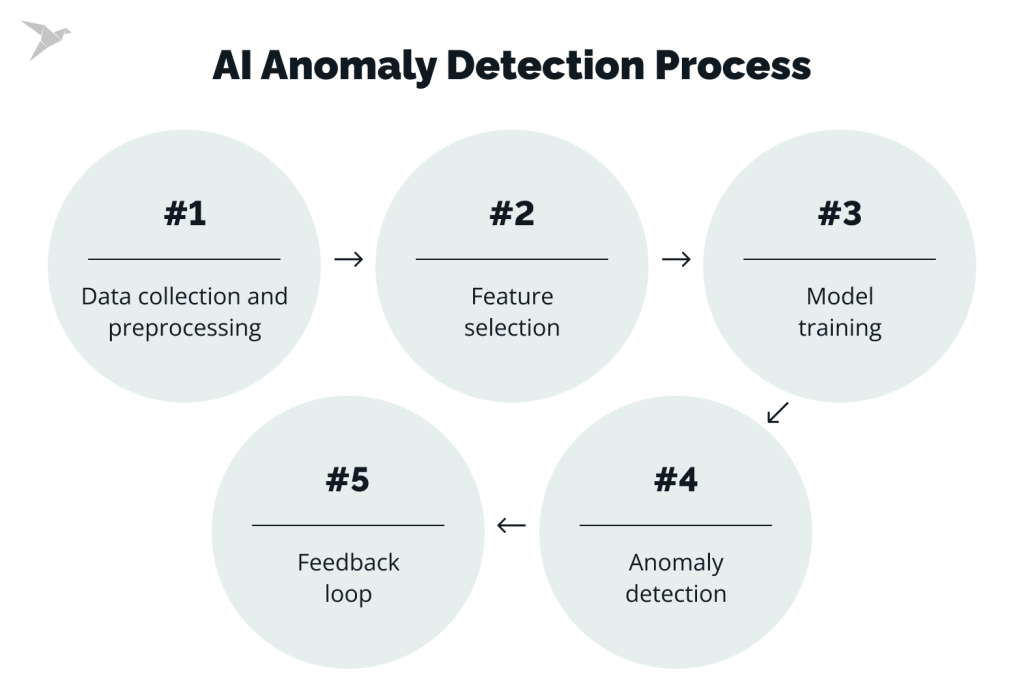
What is Anomaly Detection?
Anomaly detection involves identifying patterns or observations that significantly deviate from the expected norm. These anomalies can be indicative of errors, fraud, or potential security threats. Traditional methods of anomaly detection rely heavily on predefined rules and statistical thresholds, which often fall short in dynamic and complex environments. Here’s where AI in anomaly detection steps in.
How AI Enhances Anomaly Detection
AI enhances anomaly detection by leveraging advanced algorithms and machine learning techniques to identify patterns and anomalies more accurately. Unlike traditional methods that rely on static rules, AI systems can learn from historical data and adapt to new patterns over time. Here are some key ways AI in anomaly detection is making a difference:
1. Automated Pattern Recognition
AI algorithms excel at recognizing patterns within large datasets that would be impossible for humans to detect. By employing machine learning models, AI systems can automatically identify anomalies by comparing incoming data against established patterns. This process is significantly faster and more accurate than manual methods.
2. Real-Time Analysis
One of the major advantages of AI in anomaly detection is its ability to perform real-time analysis. Traditional methods may take considerable time to process and analyze data, which can delay the detection of anomalies. AI-powered systems can analyze data streams in real time, ensuring that anomalies are detected and addressed promptly.
3. Adaptive Learning
AI systems equipped with machine learning capabilities continuously learn and adapt from new data. This adaptive learning process allows AI to refine its anomaly detection models over time. As a result, AI can improve its accuracy and reduce false positives by understanding evolving patterns and trends.
4. Scalability
AI in anomaly detection is highly scalable, making it suitable for handling vast amounts of data across various applications. Whether it’s monitoring network traffic, financial transactions, or manufacturing processes, AI systems can scale to accommodate increasing data volumes without compromising performance.
Applications of AI in Anomaly Detection
The versatility of AI in anomaly detection allows it to be applied across multiple domains. Here are some key areas where AI-driven anomaly detection is making a substantial impact:
1. Cybersecurity
In the realm of cybersecurity, AI in anomaly detection is crucial for identifying unusual activities that may indicate security breaches or cyberattacks. By analyzing network traffic and user behavior, AI can detect anomalies that might be indicative of malicious activities, thus enhancing the overall security posture.
2. Finance
In the financial sector, AI is used to detect fraudulent transactions and unusual financial activities. By analyzing transaction patterns and comparing them to historical data, AI systems can flag suspicious activities that may suggest fraud or financial irregularities.
3. Healthcare
AI in anomaly detection is also proving valuable in healthcare. It can be used to monitor patient data for unusual patterns that might indicate health issues or complications. Early detection of anomalies in medical data can lead to timely interventions and improved patient outcomes.
4. Manufacturing
In manufacturing, AI-driven anomaly detection helps in monitoring equipment and processes. By identifying deviations from normal operational patterns, AI can help in predicting equipment failures or quality issues before they escalate, thereby reducing downtime and maintenance costs.
Challenges and Considerations
While AI in anomaly detection offers numerous benefits, there are also challenges to consider:
1. Data Quality
The effectiveness of AI in anomaly detection largely depends on the quality of the data used for training and analysis. Inaccurate or incomplete data can lead to unreliable results, making data quality a critical factor.
2. Model Complexity
Developing and fine-tuning AI models for anomaly detection can be complex and resource-intensive. Ensuring that models are appropriately designed and maintained is essential for achieving accurate and reliable results.
3. False Positives
AI systems may sometimes generate false positives, identifying normal patterns as anomalies. Fine-tuning and continuous learning are necessary to minimize false positives and ensure that the system accurately distinguishes between genuine anomalies and normal variations.
Future of AI in Anomaly Detection
The future of AI in anomaly detection looks promising with ongoing advancements in machine learning and data analytics. Emerging technologies and improved algorithms are expected to further enhance the accuracy and efficiency of anomaly detection systems. As AI continues to evolve, it will likely play an even more crucial role in safeguarding systems and processes across various industries.
Conclusion
AI in anomaly detection is transforming how we identify and respond to unusual patterns across different domains. By leveraging advanced algorithms and real-time analysis, AI enhances the accuracy and efficiency of anomaly detection processes. While there are challenges to address, the benefits of AI in anomaly detection are substantial, offering improved security, reduced risks, and better decision-making capabilities. As technology advances, the role of AI in anomaly detection will continue to grow, shaping the future of data management and security.
 Tech Business
Leave a comment