In recent years, the integration of artificial intelligence (AI) has revolutionized various industries, and the legal sector is no exception. AI agents for legal purposes are increasingly becoming indispensable tools for law firms and legal professionals. This article delves into how AI agents for legal tasks are reshaping the legal landscape, enhancing efficiency, and improving client outcomes.
What Are AI Agents for Legal?
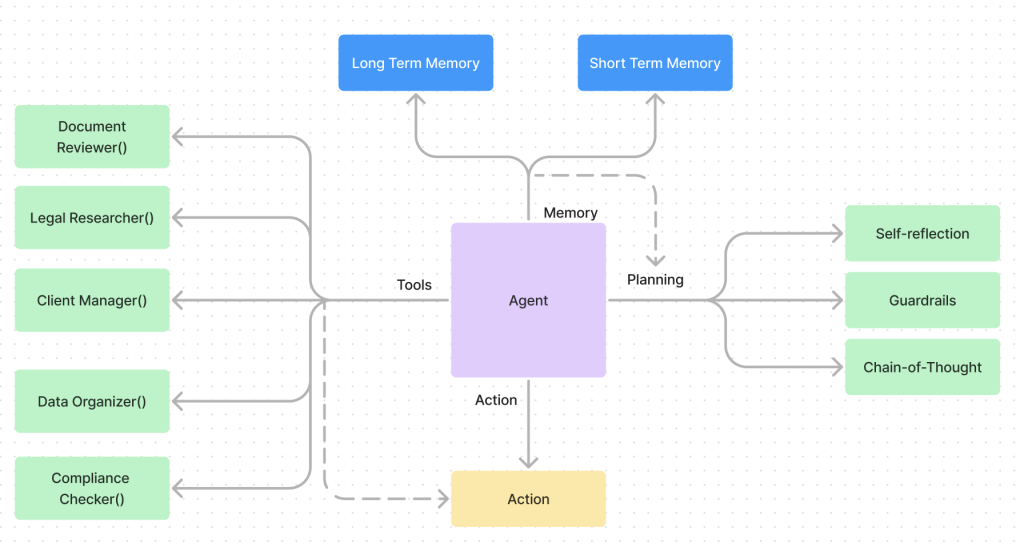
AI agents for legal refer to software programs that use artificial intelligence technologies to perform tasks traditionally handled by human legal professionals. These tasks can range from simple administrative functions to complex legal research and analysis. AI agents for legal leverage machine learning, natural language processing, and other AI techniques to process and interpret legal information, making them valuable assets in the legal field.
Benefits of AI Agents for Legal
Increased Efficiency and Productivity
One of the most significant advantages of AI agents for legal is their ability to increase efficiency and productivity within law firms. By automating repetitive and time-consuming tasks, such as document review and data entry, AI agents for legal free up valuable time for attorneys to focus on more complex and strategic aspects of their cases. This automation not only speeds up the legal process but also reduces the risk of human error.
Enhanced Accuracy and Precision
AI agents for legal are designed to analyze vast amounts of data with high accuracy. When it comes to tasks like legal research, these agents can quickly sift through legal texts, case law, and statutes to provide precise and relevant information. This level of accuracy helps legal professionals make better-informed decisions and build stronger cases, ultimately benefiting clients.
Cost Savings
Implementing AI agents for legal can lead to significant cost savings for law firms. By reducing the need for extensive manual labor and minimizing errors, these AI tools help lower operational costs. Additionally, AI agents for legal can streamline billing processes and improve overall financial management within law firms, contributing to further cost reductions.
Applications of AI Agents for Legal
Legal Research and Analysis
AI agents for legal excel in the realm of legal research and analysis. They can rapidly review and analyze case law, statutes, and legal precedents to assist attorneys in developing legal strategies. These agents use natural language processing to understand and interpret legal language, making it easier for legal professionals to find relevant information and build strong arguments.
Contract Review and Management
Contract review is a critical but often labor-intensive task for legal professionals. AI agents for legal can automate the review process by scanning contracts for key terms, clauses, and potential issues. This not only speeds up the contract review process but also helps ensure that important details are not overlooked. Additionally, AI agents for legal can assist in contract management by tracking deadlines and obligations.
Predictive Analytics
Predictive analytics is another area where AI agents for legal are making a significant impact. By analyzing historical case data and trends, these AI tools can provide insights into the likely outcomes of legal cases. This information helps attorneys make informed decisions about case strategies and settlement negotiations.
Challenges and Considerations
Ethical and Privacy Concerns
While AI agents for legal offer numerous benefits, they also raise ethical and privacy concerns. The use of AI in the legal field involves handling sensitive client information, and there is a need to ensure that these systems adhere to strict data protection standards. Legal professionals must carefully evaluate the ethical implications of using AI agents for legal, including issues related to confidentiality and bias.
Integration with Existing Systems
Integrating AI agents for legal into existing legal practice management systems can be challenging. Law firms may need to invest in training and adapt their workflows to fully leverage the capabilities of these AI tools. Ensuring seamless integration with current systems is crucial for maximizing the benefits of AI agents for legal.
Future Trends in AI Agents for Legal
The future of AI agents for legal holds exciting possibilities. As AI technology continues to advance, these agents are expected to become even more sophisticated and capable. Future developments may include enhanced natural language understanding, improved predictive analytics, and more intuitive user interfaces. The continued evolution of AI agents for legal will likely lead to even greater efficiencies and innovations in the legal industry.
Conclusion
AI agents for legal are transforming the legal industry by enhancing efficiency, accuracy, and cost-effectiveness. Their ability to automate routine tasks, conduct thorough research, and provide predictive insights is reshaping how legal professionals approach their work. While there are challenges to consider, the potential benefits of AI agents for legal are substantial. As technology continues to advance, these AI tools will play an increasingly vital role in the future of legal services.
 Tech Business
Leave a comment