Introduction
In today’s fast-paced, data-driven world, due diligence is a crucial process for businesses and investors to assess risks and make informed decisions. Traditionally, due diligence involves painstakingly reviewing financial records, legal documents, and other essential data sources. However, the advent of AI research solutions for due diligence is transforming the way organizations manage this process, making it faster, more accurate, and more efficient than ever before. This article explores how AI is reshaping due diligence, offering transformative benefits that streamline the research and evaluation process.
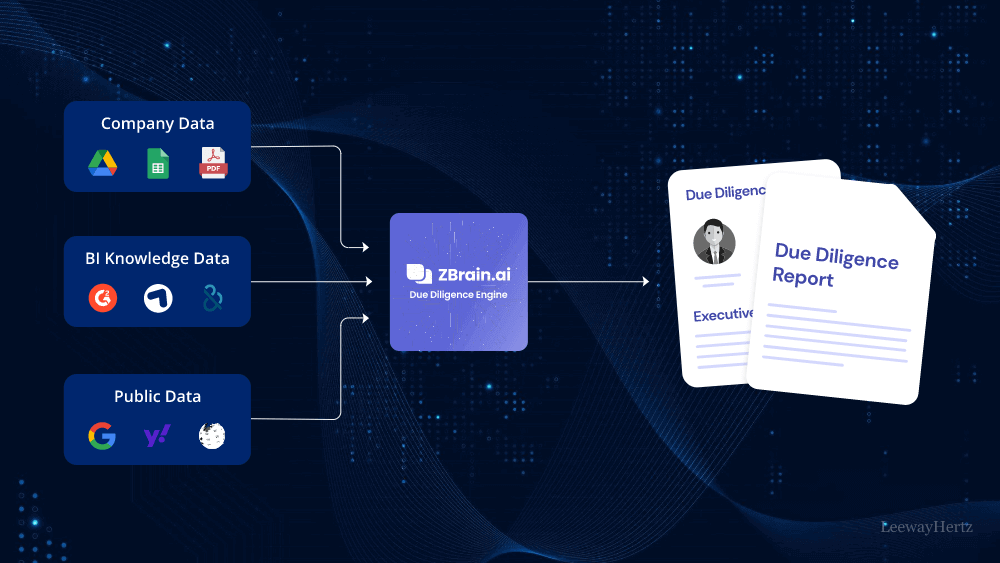
Understanding Due Diligence and Its Challenges
Due diligence refers to the comprehensive investigation carried out before entering a business transaction, such as mergers, acquisitions, or partnerships. This process typically involves the review of legal, financial, and operational records to ensure that the transaction aligns with regulatory requirements and business objectives.
Historically, due diligence has been a time-consuming and labor-intensive process, relying on manual data collection and analysis. The sheer volume of data can be overwhelming, and even the most diligent teams may struggle to keep up with the pace of modern business needs. Inaccuracies and missed insights can result in significant financial and reputational risks for companies. This is where AI research solutions for due diligence are transforming the landscape.
How AI is Transforming Due Diligence
AI technology has advanced significantly in recent years, providing powerful tools that can sift through large volumes of data, identify patterns, and generate actionable insights in a fraction of the time it takes a human team. AI research solutions for due diligence are transforming the process in several key ways:
- Speed and Efficiency
One of the primary benefits of AI is its ability to process data at lightning speed. What might take a human team weeks or even months to analyze can be done in a matter of hours or days using AI-powered tools. AI systems can automatically collect, categorize, and analyze data from various sources, including legal documents, financial statements, and news reports. This increased efficiency enables companies to make quicker and more informed decisions, giving them a competitive edge in the marketplace. - Enhanced Accuracy
Manual due diligence processes are prone to human error. With the sheer volume of data involved, it’s easy to overlook critical information or misinterpret data. AI research solutions for due diligence significantly reduce the likelihood of these errors by using advanced algorithms to ensure that all relevant data is captured, analyzed, and cross-referenced. AI can identify trends, anomalies, and correlations that may not be immediately obvious to a human reviewer, enhancing the overall accuracy of the analysis. - Risk Mitigation
AI-powered due diligence tools are particularly effective at identifying potential risks that may go unnoticed in traditional due diligence. AI can evaluate vast amounts of unstructured data from sources such as social media, regulatory filings, and news reports to identify warning signs, such as potential legal disputes, regulatory violations, or financial red flags. By providing early warnings of potential issues, AI research solutions for due diligence help organizations mitigate risks more effectively, safeguarding their investments and reputations. - Data-Driven Decision Making
AI research solutions for due diligence are transforming decision-making by providing data-driven insights that help companies make more informed choices. AI can synthesize data from multiple sources, enabling organizations to build a comprehensive picture of the target company or investment. This level of analysis helps decision-makers assess the potential for success and align their strategies accordingly. The depth and breadth of information AI can process far surpasses what human analysts can achieve, ensuring that businesses have access to the most up-to-date and relevant data.
The Role of Natural Language Processing (NLP)
Natural Language Processing (NLP) is a branch of AI that allows machines to understand, interpret, and respond to human language. NLP plays a critical role in AI research solutions for due diligence by enabling systems to analyze and interpret vast amounts of unstructured data, such as legal documents, contracts, and emails. This is particularly valuable in due diligence processes, where much of the relevant information is text-based.
NLP-powered tools can scan documents for specific keywords, phrases, or clauses that may indicate risk, helping companies quickly identify potential issues without having to manually review every document. Moreover, NLP can translate and interpret documents in multiple languages, making it easier for organizations to conduct cross-border due diligence.
The Future of Due Diligence with AI
The adoption of AI research solutions for due diligence is expected to grow as more organizations recognize the value of AI in enhancing efficiency, accuracy, and risk management. As AI technology continues to evolve, we can expect to see even more sophisticated tools that offer deeper insights and predictive capabilities.
In the future, AI-driven due diligence could involve predictive analytics, allowing companies to forecast potential risks or opportunities based on historical data and trends. Machine learning, a subset of AI, could also enable these systems to continuously improve and adapt, offering even more precise and tailored insights over time.
Ethical Considerations
While AI research solutions for due diligence are transforming the landscape, it’s important to consider the ethical implications of relying on AI. AI systems are only as good as the data they are trained on, meaning that if the data is biased or incomplete, the resulting analysis may be flawed. Organizations must ensure that they use high-quality, unbiased data to train their AI models and implement transparent processes for reviewing AI-generated insights.
Moreover, AI should not completely replace human judgment. While AI can significantly enhance due diligence efforts, it’s important to maintain a balance between automated analysis and human oversight. Human experts bring context, experience, and intuition to the decision-making process, complementing the efficiency and accuracy of AI tools.
Conclusion
AI research solutions for due diligence are transforming the way businesses and investors conduct investigations, offering faster, more accurate, and more efficient analysis than traditional methods. By leveraging AI, organizations can better manage risk, make data-driven decisions, and stay competitive in an increasingly complex business environment. As AI technology continues to advance, the future of due diligence looks brighter, with AI poised to play an even more prominent role in ensuring successful transactions and investments.
 Tech Business
Leave a comment