Introduction
Artificial Intelligence (AI) has emerged as a transformative force across various sectors, and healthcare is no exception. The integration of AI in healthcare is reshaping how medical professionals diagnose, treat, and manage patient care. This article explores the impact, benefits, and future potential of AI in healthcare, illustrating how it is revolutionizing the industry.
The Evolution of AI in Healthcare
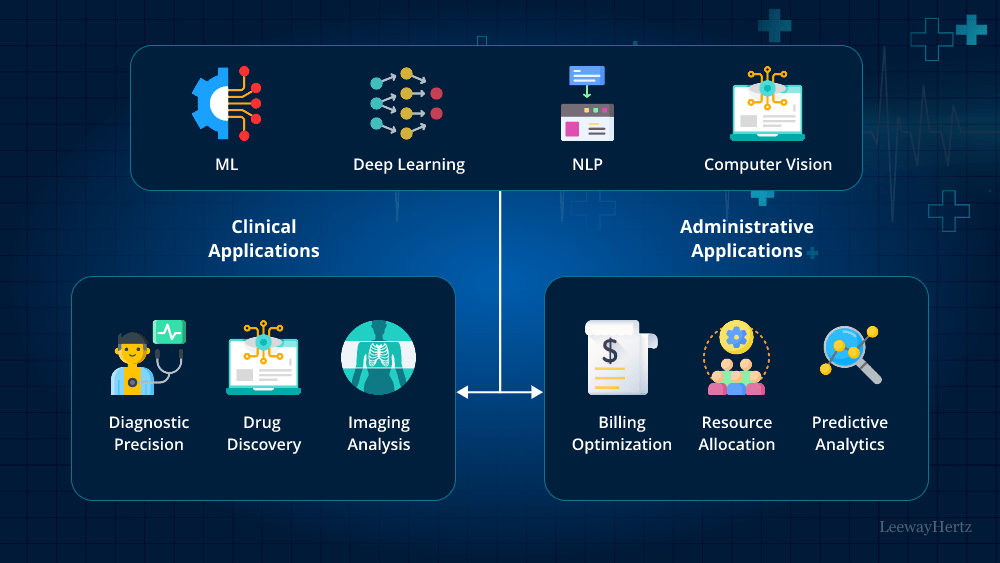
AI in healthcare is not a new concept; it has been evolving for decades. Initially focused on data analysis and administrative tasks, AI has now advanced to complex applications, such as predictive analytics and personalized medicine. This evolution has been fueled by the exponential growth of health data, improvements in computational power, and advancements in machine learning algorithms. As a result, healthcare providers are increasingly leveraging AI to enhance operational efficiency and improve patient outcomes.
Enhancing Diagnostics
One of the most significant applications of AI in healthcare is in diagnostics. Traditional diagnostic methods can be time-consuming and prone to human error. However, AI algorithms can analyze vast amounts of medical data, including imaging studies, lab results, and patient histories, much faster and more accurately. For example, AI-driven image analysis can detect anomalies in X-rays, MRIs, and CT scans that might be missed by the human eye. This capability allows for earlier detection of diseases, improving the chances of successful treatment and recovery.
Personalizing Treatment Plans
AI in healthcare is also playing a crucial role in personalizing treatment plans. With the help of machine learning, healthcare providers can analyze individual patient data to recommend tailored treatment options. This personalization extends beyond medication to include lifestyle and dietary changes, enhancing overall patient care. By considering a patient’s unique genetic makeup, medical history, and lifestyle factors, AI enables healthcare professionals to make informed decisions that align closely with each patient’s needs, ultimately leading to better health outcomes.
Streamlining Administrative Processes
The administrative side of healthcare often involves tedious and repetitive tasks that can detract from patient care. AI in healthcare can automate these processes, allowing medical professionals to focus on what they do best: caring for patients. Tasks such as appointment scheduling, billing, and patient data entry can be streamlined through AI-powered systems, reducing wait times and improving overall operational efficiency. This automation not only enhances productivity but also contributes to a better patient experience.
Predictive Analytics for Preventative Care
Another significant benefit of AI in healthcare is its ability to facilitate predictive analytics. By analyzing historical data and identifying trends, AI can predict potential health issues before they arise. For instance, AI systems can analyze patient records to identify individuals at high risk for conditions such as diabetes or heart disease. This proactive approach allows healthcare providers to implement preventative measures, such as lifestyle changes or regular screenings, ultimately reducing the incidence of severe health issues and improving population health.
Improving Patient Engagement
AI in healthcare is also transforming patient engagement. Chatbots and virtual assistants powered by AI can provide patients with 24/7 access to information and support. These tools can answer common questions, provide medication reminders, and even assist with symptom assessment. By enhancing communication between patients and healthcare providers, AI fosters a more informed and engaged patient population. This engagement is crucial for improving adherence to treatment plans and enhancing overall health outcomes.
Ethical Considerations
While the benefits of AI in healthcare are substantial, ethical considerations must also be addressed. The use of AI raises questions about data privacy, algorithm bias, and the need for transparency in decision-making processes. Healthcare providers must ensure that AI systems are designed with patient privacy in mind and that algorithms are regularly audited to prevent bias. Establishing ethical guidelines and regulations will be essential for the responsible deployment of AI technologies in healthcare.
The Future of AI in Healthcare
The future of AI in healthcare is promising. As technology continues to advance, we can expect to see even more innovative applications. For example, AI may play a significant role in drug discovery, helping researchers identify potential new treatments more quickly and efficiently. Additionally, the integration of AI with other technologies, such as telemedicine and wearable devices, will further enhance patient care.
Moreover, ongoing research and development in AI will likely lead to the creation of more sophisticated algorithms that can adapt to the ever-changing landscape of healthcare. As these technologies mature, the potential for AI to revolutionize patient care will only grow.
Conclusion
AI in healthcare represents a paradigm shift in how we approach medical care. From enhancing diagnostics to personalizing treatment plans and streamlining administrative processes, AI is making a profound impact on the healthcare industry. As we navigate the challenges and opportunities that come with this technology, the focus must remain on using AI to improve patient outcomes while ensuring ethical practices. The journey of AI in healthcare is just beginning, and its potential to transform the industry is boundless.
 Tech Business
Leave a comment