Introduction
In recent years, the logistics industry has undergone significant changes, driven by advancements in technology. One of the most promising developments is the emergence of generative AI in logistics. This innovative approach leverages artificial intelligence to improve efficiency, reduce costs, and enhance decision-making processes within the supply chain. This article explores how generative AI is transforming logistics and the myriad benefits it offers to companies operating in this sector.
Understanding Generative AI
Generative AI refers to algorithms that can generate new content, designs, or solutions based on existing data. Unlike traditional AI, which focuses on analyzing and predicting outcomes, generative AI creates new possibilities and optimizations. In logistics, this technology can analyze vast amounts of data from various sources to produce insights that help streamline operations, enhance planning, and improve customer satisfaction.
Enhancing Supply Chain Management
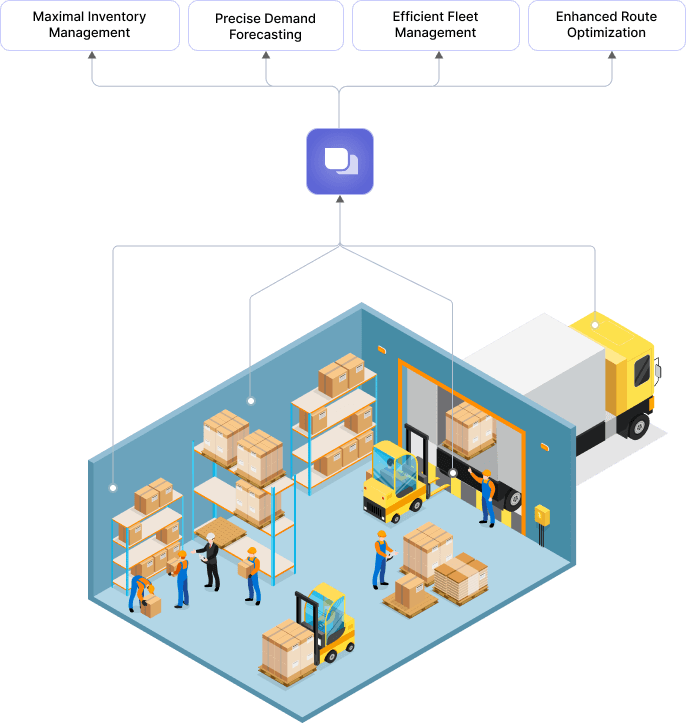
One of the key applications of generative AI in logistics is in supply chain management. By analyzing historical data, market trends, and demand forecasts, generative AI can optimize inventory levels, ensuring that companies have the right amount of stock at the right time. This not only reduces excess inventory costs but also minimizes stockouts, improving service levels. Furthermore, generative AI can simulate various supply chain scenarios, allowing logistics managers to make informed decisions based on potential outcomes.
Improving Route Optimization
Another significant benefit of generative AI in logistics is its ability to enhance route optimization. By analyzing traffic patterns, weather conditions, and delivery schedules, generative AI can generate the most efficient routes for transportation. This capability leads to reduced fuel consumption, lower operational costs, and faster delivery times. As companies strive to meet customer expectations for quick and reliable deliveries, leveraging generative AI for route optimization becomes increasingly essential.
Enhancing Predictive Maintenance
Generative AI also plays a crucial role in predictive maintenance within logistics operations. By analyzing data from sensors and equipment, generative AI can predict when a vehicle or piece of machinery is likely to fail. This proactive approach allows logistics companies to perform maintenance before breakdowns occur, minimizing downtime and maintenance costs. Additionally, it enhances overall operational efficiency, ensuring that resources are utilized effectively.
Streamlining Warehouse Operations
Warehouse management is another area where generative AI is making a significant impact. With the help of generative AI, logistics companies can optimize warehouse layouts, manage inventory levels, and improve picking and packing processes. By analyzing order patterns and inventory turnover rates, generative AI can suggest optimal storage locations for products, enhancing overall warehouse efficiency. Moreover, it can automate certain tasks, freeing up employees to focus on higher-value activities.
Personalizing Customer Experience
Customer experience is a crucial aspect of logistics, and generative AI can help companies deliver a more personalized service. By analyzing customer data, generative AI can generate insights into customer preferences and behaviors. This information can be used to tailor logistics solutions, ensuring that customers receive the level of service that meets their expectations. For example, generative AI can suggest delivery options based on a customer’s previous choices, improving overall satisfaction.
Enabling Sustainability Efforts
Sustainability is becoming increasingly important in logistics, and generative AI can assist companies in their efforts to reduce their environmental impact. By optimizing routes, improving fuel efficiency, and minimizing waste, generative AI contributes to more sustainable logistics operations. Furthermore, it can help logistics companies track and analyze their carbon emissions, enabling them to set and achieve sustainability goals. As consumers become more environmentally conscious, companies that prioritize sustainability will likely gain a competitive edge.
Overcoming Challenges
While the benefits of generative AI in logistics are substantial, there are also challenges that companies must address. Data quality is critical; for generative AI to be effective, it requires accurate and comprehensive data. Companies need to invest in data collection and management systems to ensure they can leverage the full potential of generative AI. Additionally, there may be resistance to change from employees accustomed to traditional processes. Training and education are essential to help employees understand and embrace generative AI technologies.
Conclusion
Generative AI in logistics is revolutionizing the industry, offering companies innovative solutions to enhance efficiency, reduce costs, and improve customer satisfaction. By leveraging generative AI for supply chain management, route optimization, predictive maintenance, warehouse operations, and customer personalization, logistics companies can gain a competitive advantage in a rapidly evolving market. As technology continues to advance, those who embrace generative AI will be well-positioned to navigate the challenges and opportunities of the future. The integration of generative AI in logistics not only improves operational efficiency but also contributes to a more sustainable and customer-centric approach to logistics management.
 Tech Business
Leave a comment