Introduction
Generative AI in legal represents a revolutionary shift in how legal professionals approach their work. As the legal industry evolves, the integration of generative AI tools offers unprecedented efficiencies, improved accuracy, and enhanced decision-making capabilities. This article explores the role of generative AI in legal, its applications, benefits, and the challenges it presents.
Understanding Generative AI
Generative AI refers to algorithms that can create new content based on existing data. This technology is capable of generating text, images, and even complex legal documents by analyzing large datasets. In the context of the legal field, generative AI has the potential to streamline numerous processes, making them faster and more effective.
Applications of Generative AI in Legal
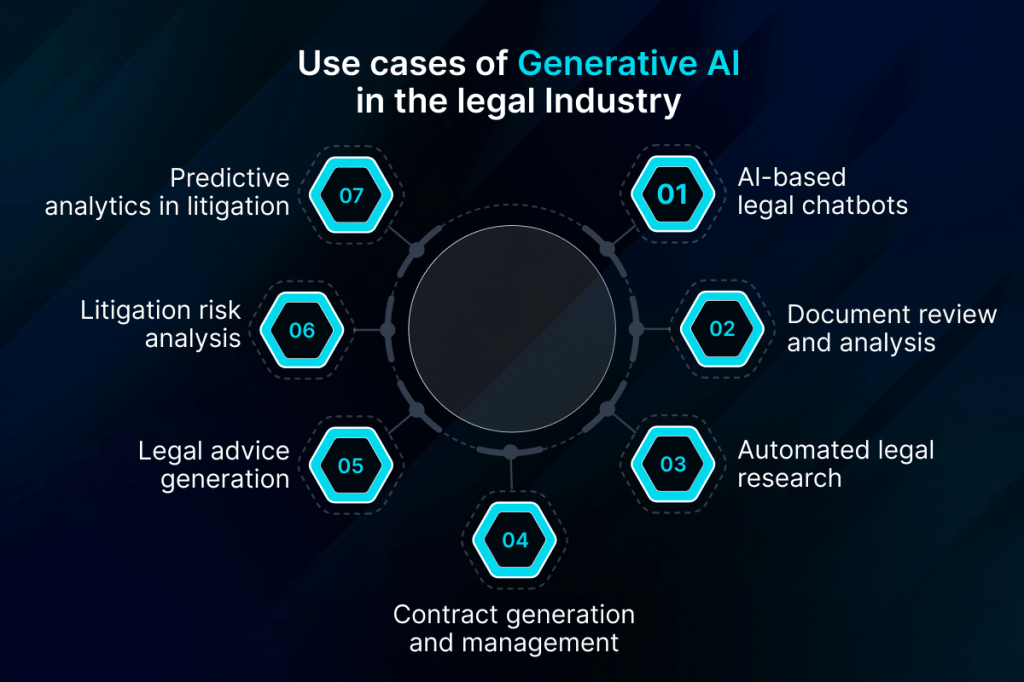
The applications of generative AI in legal are vast and varied. Some key areas include:
Document Drafting
One of the most significant applications of generative AI in legal is document drafting. Traditionally, creating legal documents can be a time-consuming and labor-intensive process. However, generative AI can automatically draft contracts, agreements, and other legal documents based on predefined templates and input data. This capability not only saves time but also reduces the likelihood of human error, ensuring greater accuracy in legal writing.
Legal Research
Legal research is another area where generative AI can make a considerable impact. By analyzing vast databases of legal texts, case law, and statutes, generative AI can quickly identify relevant precedents and legal principles. This accelerates the research process, allowing lawyers to spend more time on strategic analysis and client interaction rather than sifting through documents.
Predictive Analytics
Generative AI in legal also plays a crucial role in predictive analytics. By analyzing historical data and trends, generative AI can forecast potential outcomes of legal cases. This information can guide lawyers in crafting strategies and advising clients on the likelihood of success in litigation or negotiation.
Contract Analysis
Contract analysis is a complex task that requires meticulous attention to detail. Generative AI can assist in reviewing and analyzing contracts, identifying potential risks, inconsistencies, and compliance issues. This functionality not only enhances the efficiency of contract management but also minimizes the risk of overlooking critical elements that could lead to disputes.
Benefits of Generative AI in Legal
The integration of generative AI in legal offers numerous benefits for law firms and legal departments:
Increased Efficiency
By automating routine tasks, generative AI allows legal professionals to focus on higher-value activities. This increased efficiency can lead to faster turnaround times for clients and ultimately a more productive legal practice.
Cost Reduction
The implementation of generative AI in legal can lead to significant cost savings. By reducing the time spent on document preparation, research, and analysis, firms can allocate resources more effectively and pass those savings on to clients.
Enhanced Accuracy
Generative AI minimizes the risk of human error in legal documentation and analysis. This enhanced accuracy is critical in the legal field, where even minor mistakes can have significant consequences.
Improved Decision-Making
With access to comprehensive data analysis and predictive insights, legal professionals can make more informed decisions. Generative AI provides valuable information that supports strategic planning and risk management.
Challenges of Generative AI in Legal
While the benefits of generative AI in legal are substantial, there are also challenges that must be addressed:
Ethical Considerations
The use of generative AI raises ethical questions regarding the practice of law. Issues related to confidentiality, data privacy, and the unauthorized practice of law must be carefully navigated to ensure compliance with legal and ethical standards.
Dependence on Technology
As law firms increasingly rely on generative AI tools, there is a risk of over-dependence on technology. Legal professionals must maintain their critical thinking and analytical skills to complement the insights provided by AI.
Data Quality
The effectiveness of generative AI is heavily reliant on the quality of the data it analyzes. Inaccurate or biased data can lead to flawed outputs, potentially compromising the legal work produced. Legal professionals must ensure that they are using high-quality, representative data to inform their AI systems.
Conclusion
Generative AI in legal is transforming the landscape of the legal industry, offering new opportunities for efficiency, accuracy, and strategic decision-making. While challenges remain, the potential benefits are too significant to ignore. As legal professionals embrace generative AI, it is crucial to remain vigilant about ethical considerations and data quality, ensuring that the technology is used responsibly and effectively. As we move forward, generative AI will undoubtedly play a pivotal role in shaping the future of legal practice.
 Tech Business
Leave a comment