Introduction
Internal audit plays a vital role in evaluating the effectiveness of an organization’s risk management, control, and governance processes. With the rapid advancements in technology, internal auditors are increasingly leveraging cutting-edge tools to enhance their capabilities. One such technology is Generative AI, which has the potential to revolutionize the internal audit landscape. This article explores how Generative AI for internal audit is transforming the process, making it more efficient, insightful, and forward-thinking.
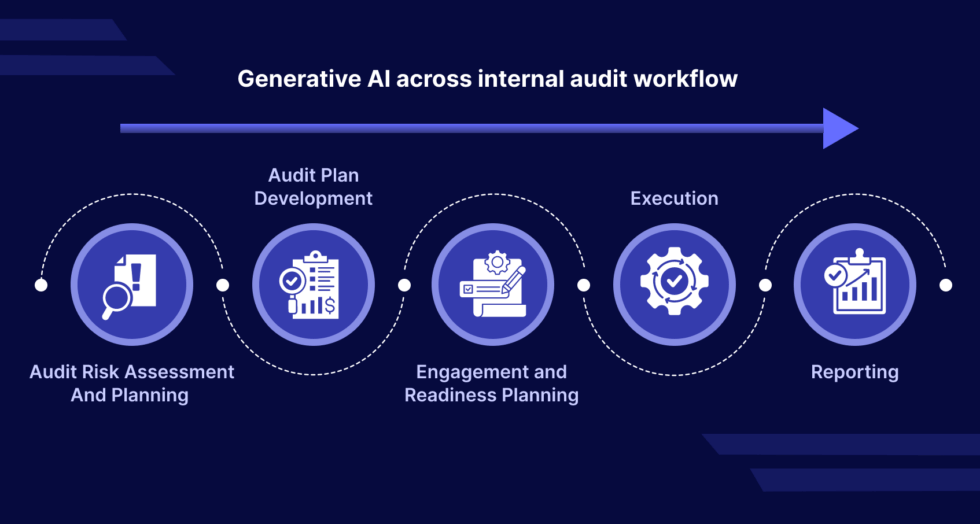
What is Generative AI?
Generative AI refers to a class of artificial intelligence models that generate new content based on existing data. Unlike traditional AI models that focus on predictive analysis, Generative AI creates original outputs such as text, images, audio, or even entire reports. These models are trained on vast datasets and use deep learning techniques to understand patterns and produce content that mimics human creation.
Generative AI for internal audit can be a powerful tool for automating routine tasks, generating audit reports, and providing valuable insights that go beyond historical data. This technology can assist auditors in identifying potential risks, making recommendations, and improving overall audit efficiency.
Enhancing Efficiency with Generative AI for Internal Audit
One of the most significant benefits of using Generative AI for internal audit is the increased efficiency it brings to the audit process. Traditional audit tasks often require manual data gathering, analysis, and report generation. With Generative AI, much of this work can be automated, allowing auditors to focus on higher-value activities such as analyzing risk patterns and making strategic recommendations.
By automating repetitive tasks such as data entry and report writing, Generative AI allows internal auditors to complete audits more quickly. This technology can also help identify anomalies or inconsistencies in financial data, reducing the time spent on manual reviews. As a result, auditors can handle larger workloads without sacrificing the quality of their work.
Improving Risk Detection and Forecasting
Generative AI for internal audit can also significantly improve the ability of auditors to detect risks and forecast future challenges. Traditional auditing methods often rely on historical data to identify trends and risks, which may not provide a complete picture of potential future issues. Generative AI, however, can analyze a wide range of data points, including real-time data, and generate scenarios that help auditors predict risks before they arise.
This forward-looking approach to risk detection gives internal auditors a powerful tool for proactive risk management. By identifying potential risks earlier in the process, organizations can take corrective action before these risks materialize, reducing the impact on the business.
Streamlining Audit Reporting
One of the most time-consuming aspects of the internal audit process is the generation of detailed reports. These reports typically include audit findings, recommendations, and a comprehensive analysis of the organization’s financial health. With Generative AI, the report generation process can be streamlined, reducing the time and effort required to produce high-quality audit reports.
Generative AI can assist by creating the first drafts of audit reports, which can then be reviewed and refined by human auditors. This not only saves time but also ensures consistency across different reports. Moreover, Generative AI can highlight key insights, making it easier for auditors to present their findings to management in a clear and concise manner.
Ensuring Compliance with Regulatory Standards
Internal audits are crucial for ensuring that organizations comply with relevant laws, regulations, and industry standards. However, the regulatory landscape is constantly evolving, and keeping up with these changes can be challenging. Generative AI for internal audit can be instrumental in helping auditors stay on top of regulatory requirements.
Generative AI models can analyze current regulations and identify areas where an organization may be at risk of non-compliance. This allows auditors to provide timely recommendations to ensure compliance with the latest standards. Additionally, Generative AI can generate audit checklists that incorporate regulatory updates, making it easier for auditors to conduct thorough compliance reviews.
Reducing Human Bias and Error
Human bias and error can significantly affect the quality of an internal audit. Auditors may unintentionally overlook certain risks or fail to recognize patterns in data that could indicate potential issues. Generative AI for internal audit can help mitigate these risks by providing an objective analysis of data.
Because Generative AI models are trained on large datasets, they are less likely to be influenced by cognitive biases that might affect human auditors. This allows for a more balanced and accurate assessment of an organization’s financial and operational health. Additionally, by automating certain audit tasks, Generative AI reduces the likelihood of human error, leading to more reliable audit outcomes.
Enhancing Continuous Auditing and Monitoring
With the increasing complexity of business operations, continuous auditing and monitoring have become essential for identifying risks in real-time. Generative AI for internal audit can play a crucial role in enabling continuous auditing processes. By continuously analyzing data and generating reports on an ongoing basis, auditors can ensure that potential risks are identified and addressed promptly.
Generative AI can also assist in setting up automated alerts for unusual activities or transactions, allowing internal auditors to respond to issues as they arise. This proactive approach to auditing not only helps improve organizational transparency but also strengthens the overall control environment.
The Future of Generative AI in Internal Audit
Generative AI for internal audit is still in its early stages, but its potential is undeniable. As the technology continues to evolve, it will likely become an integral part of the audit process, helping auditors become more efficient, accurate, and forward-thinking.
The future of Generative AI in internal audit may also include more advanced capabilities such as natural language processing for understanding complex regulatory documents and the integration of AI models with blockchain for enhanced data security. Ultimately, Generative AI has the potential to reshape internal auditing, making it a more dynamic and predictive function within organizations.
Conclusion
Generative AI for internal audit is transforming the way auditors work, offering increased efficiency, improved risk detection, and enhanced reporting capabilities. By leveraging this powerful technology, internal auditors can stay ahead of emerging risks, ensure compliance with regulatory standards, and provide more valuable insights to stakeholders. As Generative AI continues to develop, its impact on the internal audit function will only grow, paving the way for a more proactive and future-focused approach to auditing.
 Tech Business
Leave a comment