Generative AI in healthcare is reshaping how medical professionals approach patient care, diagnostics, and treatment. This advanced form of artificial intelligence (AI) leverages machine learning models to create new data, offering unprecedented possibilities for medical research, personalized treatment, and operational efficiency. In this article, we’ll explore how generative AI in healthcare is revolutionizing the industry, while maintaining a focus on patient outcomes and ethical considerations.
1. Introduction to Generative AI in Healthcare
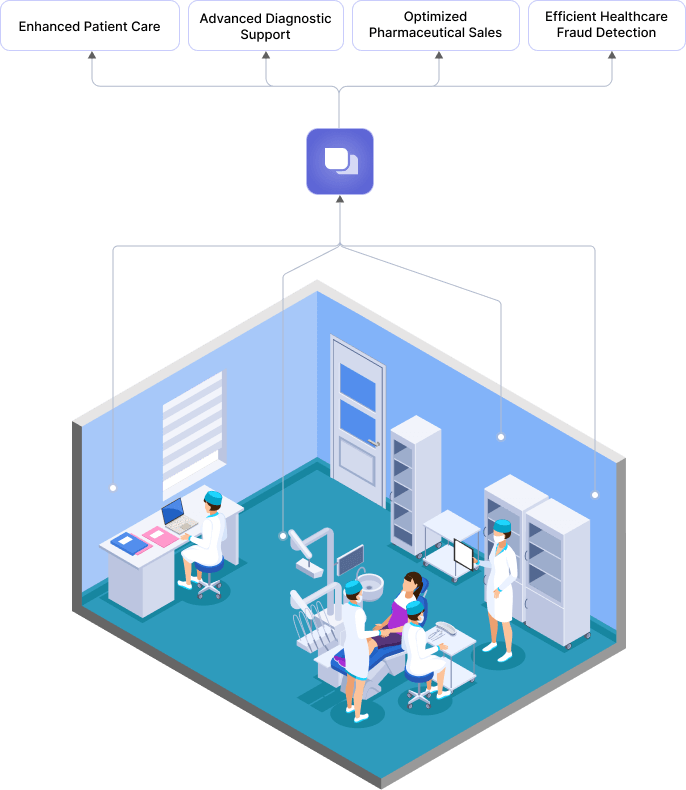
Generative AI refers to AI systems capable of producing new, previously unseen outputs. In healthcare, this can mean generating synthetic medical images, predicting future health events, or even designing personalized treatment plans. By analyzing vast amounts of data, generative AI helps professionals make better, more informed decisions, ultimately improving patient care.
Generative AI in healthcare is not just about automating tasks—it’s about enhancing the capabilities of healthcare providers, ensuring more precise and personalized care, and opening up new avenues for research. As this technology matures, the medical field is witnessing a paradigm shift in how diseases are diagnosed, treated, and even prevented.
2. Enhancing Diagnostics with Generative AI
One of the most impactful uses of generative AI in healthcare is in diagnostic processes. Medical imaging, such as X-rays, MRIs, and CT scans, produces a wealth of data that AI algorithms can analyze. Generative AI can create detailed, enhanced images from incomplete or low-quality scans, making it easier for radiologists to detect abnormalities that might otherwise go unnoticed.
Moreover, generative AI can predict disease progression by analyzing historical data from similar cases. For instance, it can simulate how a tumor might grow, helping doctors tailor treatment plans with greater accuracy. This has significant implications for diseases such as cancer, where early and accurate diagnosis can dramatically improve patient outcomes.
3. Personalized Medicine and Treatment
Generative AI in healthcare also plays a pivotal role in the development of personalized medicine. Traditional treatment methods often rely on a one-size-fits-all approach, which may not be effective for everyone. However, by using generative models, healthcare professionals can create individualized treatment plans based on a patient’s unique genetic makeup, lifestyle, and medical history.
For instance, generative AI can analyze genetic data to predict how a patient will respond to certain medications, enabling doctors to choose the most effective drugs while minimizing side effects. This personalized approach not only improves the efficacy of treatment but also reduces the time and costs associated with trial-and-error medication prescriptions.
4. Accelerating Drug Discovery and Research
The process of discovering and developing new drugs is often slow, costly, and prone to failure. Generative AI is helping to address these challenges by rapidly generating potential drug candidates based on specific molecular properties. This significantly speeds up the initial stages of drug development, where identifying viable compounds is traditionally a lengthy process.
Generative AI in healthcare is also being used to model how new drugs will interact with various biological systems. These models can predict the potential side effects of new treatments before they are tested on humans, reducing the risks associated with clinical trials. This technology could revolutionize the pharmaceutical industry by making drug development faster, safer, and more cost-effective.
5. Improving Operational Efficiency in Healthcare
Generative AI in healthcare isn’t limited to patient care and medical research; it also has the potential to improve the overall efficiency of healthcare systems. Hospitals and clinics generate vast amounts of data every day, from patient records to operational data. AI models can analyze this information to optimize workflows, predict patient admissions, and allocate resources more effectively.
For example, generative AI can be used to forecast the demand for hospital beds, ensuring that resources are available when needed. It can also predict the likelihood of patient readmissions, allowing healthcare providers to implement preventive measures. These efficiencies not only reduce costs but also enhance the quality of care patients receive.
6. Ethical Considerations and Challenges
While generative AI in healthcare offers immense potential, it also raises important ethical questions. One of the primary concerns is data privacy. For generative AI to be effective, it requires access to large datasets, which often contain sensitive patient information. Ensuring that this data is anonymized and securely stored is crucial to maintaining patient trust.
Another challenge is the potential for bias in AI models. If the data used to train these models is biased, the AI may produce skewed results, potentially leading to misdiagnoses or unequal treatment. Addressing these issues requires a careful balance between leveraging AI’s capabilities and ensuring that it is implemented in a fair and ethical manner.
7. The Future of Generative AI in Healthcare
The future of generative AI in healthcare is promising. As the technology continues to evolve, its applications will expand, offering even more innovative solutions for patient care, diagnostics, and research. In the future, we may see generative AI playing a key role in developing cures for diseases that are currently untreatable, as well as creating more advanced, minimally invasive diagnostic tools.
Additionally, as AI becomes more integrated into healthcare systems, it will likely lead to a more efficient, patient-centered approach to medicine. However, for generative AI to reach its full potential, continued investment in research, ethical guidelines, and collaboration between AI developers and healthcare providers will be essential.
Conclusion
Generative AI in healthcare is more than just a technological advancement—it is a transformative force with the potential to revolutionize the way we approach patient care, medical research, and healthcare operations. From enhancing diagnostic accuracy to personalizing treatment plans, the benefits are far-reaching. However, the implementation of generative AI must be accompanied by careful consideration of ethical challenges, particularly in the areas of data privacy and bias.
As we look to the future, generative AI in healthcare holds the promise of a smarter, more personalized, and efficient healthcare system, benefiting both medical professionals and patients alike. The impact of this technology is just beginning to be realized, and its potential to improve global health outcomes is truly groundbreaking.
 Tech Business
Leave a comment