Introduction
In today’s fast-paced world, customers expect quick and effective responses to their needs. The rise of artificial intelligence (AI) in customer service is redefining how businesses meet these expectations. AI agents in customer service are streamlining communication, reducing response times, and providing customers with round-the-clock assistance. This article explores the role, benefits, and future potential of AI agents in customer service.
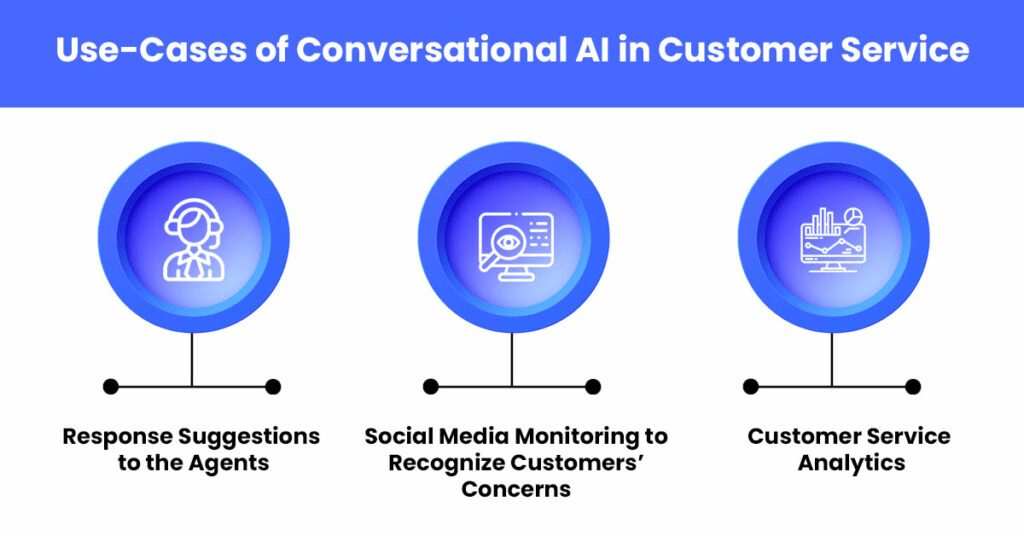
Understanding AI Agents in Customer Service
AI agents in customer service refer to digital systems, often chatbots or virtual assistants, designed to handle various customer interactions. These AI-powered tools are typically trained on large datasets, enabling them to understand and respond to customer inquiries with increasing accuracy. AI agents leverage natural language processing (NLP) and machine learning (ML) technologies, allowing them to interpret and respond to human language in a way that feels natural.
These agents can manage a wide range of tasks, from answering common questions to assisting with product selection. With AI agents in customer service, companies can handle higher customer interaction volumes without increasing the number of human agents, leading to cost savings and improved operational efficiency.
Benefits of AI Agents in Customer Service
1. Enhanced Efficiency and Productivity
AI agents excel at handling routine inquiries, freeing up human agents to focus on more complex tasks. By managing common questions and concerns, AI agents in customer service enable human agents to focus on specialized queries. This not only boosts productivity but also helps human agents avoid burnout by reducing repetitive work.
2. 24/7 Availability
One of the most significant advantages of AI agents in customer service is their ability to offer round-the-clock assistance. Customers are no longer bound by business hours and can access help anytime, which greatly enhances customer satisfaction. This level of accessibility builds trust and improves customer loyalty, as customers know they can get help whenever they need it.
3. Personalization at Scale
AI agents in customer service can analyze data about customer preferences and behaviors to deliver personalized experiences. By using customer data, AI agents can provide product recommendations, guide customers through relevant solutions, and even anticipate needs based on previous interactions. This personalized approach strengthens customer relationships and encourages repeat business.
4. Faster Response Times
In traditional customer service settings, wait times can be a significant source of frustration for customers. AI agents can quickly process inquiries and respond almost instantaneously, reducing wait times and improving the overall customer experience. AI agents in customer service provide immediate responses to common questions, creating a seamless interaction experience.
5. Cost Savings
Implementing AI agents in customer service can lead to substantial cost savings. Since AI agents can handle a large volume of inquiries without needing breaks or extensive training, businesses can reduce labor costs. These cost savings can then be redirected into other areas of customer service, such as training human agents for more complex interactions.
Key Functions of AI Agents in Customer Service
1. Handling Frequently Asked Questions (FAQs)
One of the primary functions of AI agents in customer service is to handle FAQs. This function reduces the time human agents spend answering repetitive questions and allows them to concentrate on more pressing matters. AI agents can quickly provide information on return policies, product details, account inquiries, and more, making the process easier for both customers and agents.
2. Order and Booking Management
AI agents are capable of assisting with tasks like order tracking, processing returns, and booking appointments. By managing these logistical tasks, AI agents in customer service make it easy for customers to access important details and make updates as needed.
3. Multilingual Support
Global businesses often face the challenge of providing customer service in multiple languages. AI agents in customer service can be trained to understand and respond in various languages, broadening a company’s customer reach. This feature makes AI agents an excellent solution for businesses looking to provide inclusive, accessible support on an international scale.
4. Customer Feedback Collection
AI agents can also be used to gather feedback on customer experiences. Following an interaction, AI agents can prompt customers to provide ratings or comments, helping businesses gather valuable insights. This feedback is critical for continuous improvement in customer service and identifying areas where customers may need additional assistance.
Challenges and Considerations for AI Agents in Customer Service
1. Handling Complex Queries
While AI agents in customer service are highly efficient with straightforward inquiries, they may struggle with complex, nuanced issues. For example, a customer with a unique complaint or specific product issue may require human assistance. Companies must carefully evaluate which inquiries are suitable for AI agents and ensure that human agents are available when needed.
2. Privacy and Data Security
AI agents in customer service rely on customer data to personalize interactions, making privacy a top concern. Companies must invest in strong data protection measures and be transparent about data usage to gain customer trust. With evolving data protection regulations, businesses must prioritize compliance to avoid legal and reputational risks.
3. Maintaining the Human Touch
AI agents in customer service may lack empathy, which is essential in many customer interactions. While AI can be programmed to respond politely, it may not understand the emotional context behind certain interactions. Maintaining a balance between AI and human agents is vital to ensure customers receive both efficient and empathetic service.
The Future of AI Agents in Customer Service
The role of AI agents in customer service is expected to grow as technology advances. Future AI agents will likely become more sophisticated, capable of understanding complex emotions, and adapting their responses accordingly. As AI technology continues to evolve, AI agents in customer service will become more effective at bridging the gap between customer expectations and service capabilities.
In addition, integration with other technologies, such as voice recognition and augmented reality, could expand the potential of AI agents even further. Imagine a scenario where a customer can receive virtual assistance in troubleshooting a product through an AI-driven AR experience. This future vision is just one example of how AI agents in customer service will continue to innovate and shape the customer experience.
Conclusion
AI agents in customer service are revolutionizing how businesses interact with their customers. With benefits such as faster response times, 24/7 availability, and cost efficiency, these AI-driven tools are quickly becoming indispensable in customer service strategies. While challenges like data privacy and handling complex queries remain, the potential of AI agents in customer service to deliver efficient, personalized support is undeniable. As businesses continue to adapt to the digital age, AI agents in customer service will play an increasingly central role in meeting the evolving needs of customers.
 Tech Business
Leave a comment