Introduction to Vertical AI Agents
In the ever-evolving world of artificial intelligence (AI), businesses are increasingly turning to solutions tailored to their specific needs. One of the most notable developments is the rise of vertical AI agents. Unlike general-purpose AI, which is designed to handle a broad range of tasks, vertical AI agents are specialized tools designed to optimize and automate processes within a particular industry or sector.
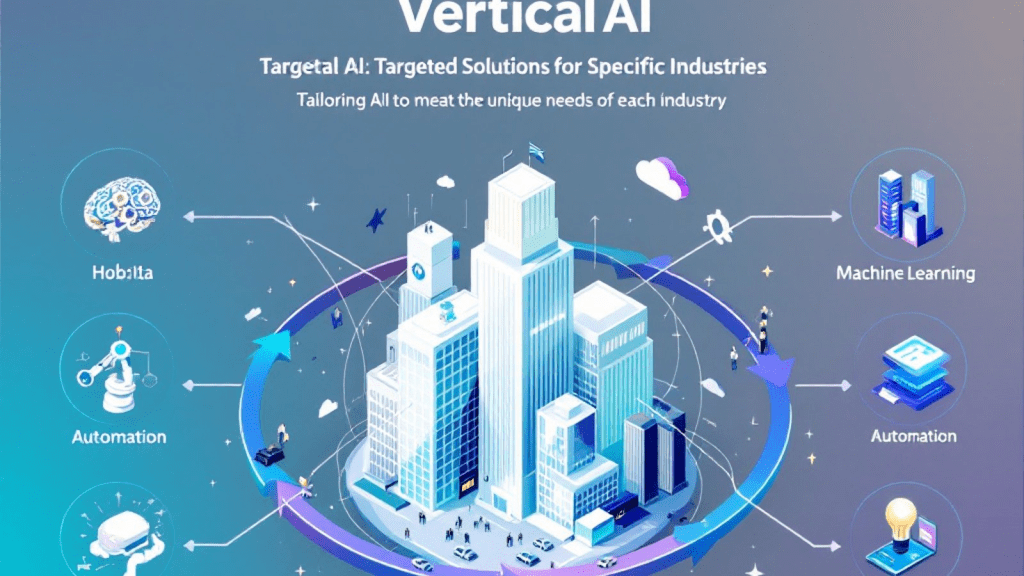
Vertical AI agents are transforming the way businesses operate, offering precision, efficiency, and expert-level decision-making capabilities. This article explores what vertical AI agents are, how they work, and why they are becoming a critical asset across various industries.
What Are Vertical AI Agents?
Vertical AI agents are AI systems that are specifically designed to address the unique challenges and requirements of a particular industry. These agents leverage advanced machine learning algorithms, natural language processing (NLP), and data analytics to perform tasks with a level of expertise and specialization that general AI solutions cannot match.
For example, a vertical AI agent in the healthcare industry could assist doctors in diagnosing diseases based on patient records and medical data, while a vertical AI agent in finance could automate the process of evaluating investment risks by analyzing market trends. The key difference between vertical and horizontal (general-purpose) AI agents is their ability to deeply understand and cater to the intricacies of a specific domain.
The Power of Specialization: How Vertical AI Agents Work
Vertical AI agents work by combining vast amounts of industry-specific data with advanced machine learning models to deliver highly specialized services. These agents are trained on large datasets unique to their industry, which enables them to make accurate predictions, automate repetitive tasks, and offer tailored solutions to problems.
For example, a vertical AI agent in the retail sector can use customer purchasing data to recommend products, forecast demand, and manage inventory. In contrast, a general AI agent might struggle to interpret the specific nuances of customer behavior in the retail space, leading to less precise recommendations or predictions.
The core functionality of vertical AI agents revolves around their ability to integrate with existing workflows, adapt to unique operational requirements, and continually learn and improve from real-world data. This ensures that the more they are used, the more efficient and effective they become.
Why Are Vertical AI Agents Becoming Essential?
The growing importance of vertical AI agents lies in their ability to deliver tangible, industry-specific benefits that generic AI systems simply cannot provide. Here are some reasons why vertical AI agents are gaining traction across various sectors:
- Industry Expertise: Vertical AI agents are trained on domain-specific knowledge, allowing them to tackle challenges with greater precision. Whether in healthcare, finance, manufacturing, or any other sector, these agents offer solutions that are directly relevant to the industry’s unique needs.
- Improved Efficiency: By automating repetitive tasks and optimizing workflows, vertical AI agents can significantly reduce the time and effort required to complete tasks. This leads to higher operational efficiency and faster decision-making.
- Cost Reduction: Automation powered by vertical AI agents can help companies reduce operational costs by minimizing human error, reducing the need for manual labor, and enhancing overall productivity. For example, in manufacturing, vertical AI agents can monitor production lines and detect defects faster than human workers.
- Better Decision-Making: Vertical AI agents excel at data analysis, providing valuable insights to help businesses make informed decisions. In sectors like finance, vertical AI agents can analyze market data to provide investment advice or predict stock trends.
- Customization: Vertical AI agents can be fine-tuned to meet the specific needs of a business or organization. This makes them more flexible and adaptable compared to horizontal AI agents, which are often limited by their broad, one-size-fits-all approach.
Applications of Vertical AI Agents
Vertical AI agents are already making significant impacts across a variety of industries. Here are some of the ways they are being used:
- Healthcare: In healthcare, vertical AI agents are used for everything from diagnostic support to patient care optimization. They analyze medical images, interpret lab results, and even predict disease outbreaks. These agents assist doctors by providing them with precise recommendations, improving patient outcomes and reducing human error.
- Finance: Vertical AI agents in the financial sector are designed to manage portfolios, assess risks, and detect fraud. They can analyze market conditions in real-time and assist traders in making informed decisions. Moreover, AI-driven chatbots are helping customers with their banking needs, from handling transactions to answering queries.
- Retail: In retail, vertical AI agents enhance the customer experience by providing personalized shopping recommendations, managing supply chains, and optimizing inventory. They analyze consumer behavior and predict demand, allowing retailers to make smarter inventory decisions.
- Manufacturing: Vertical AI agents in manufacturing are used for predictive maintenance, quality control, and supply chain optimization. They can predict equipment failures before they occur, ensuring a smooth production process and minimizing downtime.
- Logistics: Vertical AI agents optimize routing for delivery trucks, manage fleet operations, and forecast demand in logistics. These agents enable companies to reduce fuel costs, improve delivery times, and provide better customer service.
The Future of Vertical AI Agents
As AI technology continues to evolve, vertical AI agents will become even more sophisticated, offering deeper insights and more powerful capabilities. The integration of AI with Internet of Things (IoT) devices, blockchain, and other emerging technologies will further enhance the functionality of vertical AI agents.
Looking forward, vertical AI agents will likely become essential for businesses seeking to stay competitive in an increasingly complex and data-driven world. The ability to make decisions based on vast, industry-specific data sets will give businesses an edge over their competitors, making vertical AI agents indispensable in the future of work.
Conclusion
Vertical AI agents represent a powerful evolution in the world of artificial intelligence. By focusing on industry-specific applications, these agents offer businesses unparalleled expertise and efficiency, transforming sectors like healthcare, finance, retail, and manufacturing. As more companies adopt these solutions, vertical AI agents will continue to play a pivotal role in driving innovation and improving operational performance. With their ability to learn, adapt, and automate complex tasks, vertical AI agents are paving the way for a future where AI is tailored to the unique needs of every industry.
 Tech Business
Leave a comment